
FDA Grants Traditional Approval to Selpercatinib for RET Fusion-Positive Solid Tumors
Medical Review DisclosureThis content has been reviewed for medical accuracy. Always consult a qualified healthcare professional before making any medical
Treatments & Therapies

Medical Review Disclosure
This content has been reviewed for medical accuracy. Always consult a qualified healthcare professional before making any medical decisions. [Last reviewed: 2026-05-17]
n
Chronic lymphocytic leukemia (CLL) treatment has advanced significantly over the past decade, particularly with the introduction of targeted therapies such as BCL2 inhibitors and monoclonal antibodies. Now, new research offers promising evidence that patients who previously responded to venetoclax and rituximab (VenR) may benefit from retreatment with the same combination after disease progression.
A recent study published in HemaSphere reports a remarkable 100% overall response rate (ORR) among patients retreated with VenR, along with prolonged progression-free survival (PFS). These findings suggest that fixed-duration venetoclax-based therapy may not only induce deep initial responses but also preserve sensitivity to retreatment.
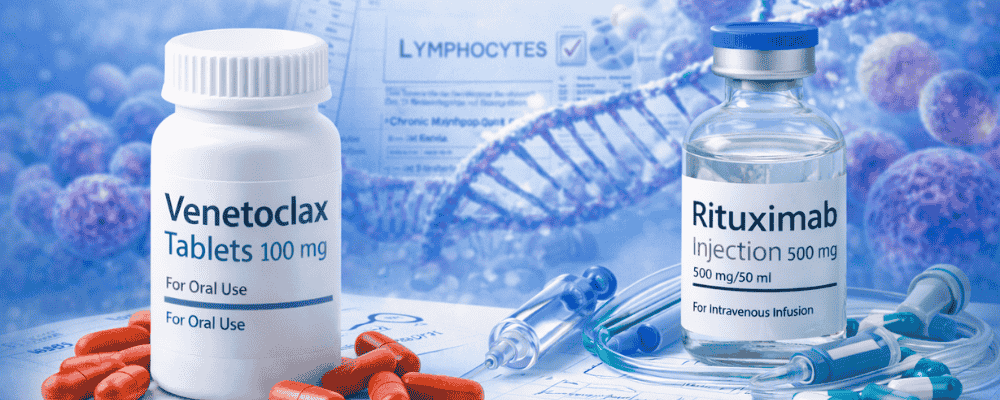
Venetoclax is a BCL2 inhibitor that promotes apoptosis (programmed cell death) in CLL cells. Rituximab is a monoclonal antibody targeting CD20 on B lymphocytes. Together, this combination has become a well-established treatment option for relapsed or refractory CLL.
The phase 1b M13-365 trial (NCT01682616) originally evaluated this combination and allowed patients to discontinue therapy if they achieved a deep response. This design enabled investigators to later study retreatment outcomes when patients experienced disease progression after stopping therapy.
This analysis included nine patients (four male and five female) enrolled between August 2012 and May 2014. Patient characteristics included:
These diverse genomic backgrounds make the results particularly noteworthy.
Importantly, many patients achieved undetectable minimal residual disease (uMRD), which is strongly associated with improved long-term outcomes.
Disease progression after initial therapy was defined as:
Prior to retreatment, confirmation included:
Retreatment protocol:
All nine patients responded to retreatment:
This resulted in a 100% overall response rate.
The durability of response was particularly striking:
Patients remained off treatment for a median of 38.4 months before disease progression. Four patients remain progression-free more than one year after retreatment and are currently off therapy.
These findings suggest that fixed-duration therapy does not compromise long-term disease control and may preserve retreatment effectiveness.
Before retreatment:
After retreatment, patients again achieved meaningful responses, reinforcing the idea that deep initial responses may maintain disease sensitivity.
The study also demonstrated that progression-free survival off therapy among patients achieving deep response was comparable to that of those who remained on continuous treatment.
An important subanalysis examined BCL2 mutations:
Additionally:
These results suggest that resistance mutations may not universally persist or prevent retreatment response.
This study is significant for several reasons:
Unlike continuous therapy models, fixed-duration treatment allows patients meaningful time off therapy, potentially improving quality of life and reducing cumulative toxicity.
However, this analysis reports a longer median time off therapy compared with prior research, strengthening the argument for time-limited therapy strategies.
Despite these limitations, the 100% response rate and nearly 5-year median PFS after retreatment are highly encouraging.
The phase 1b M13-365 study provides compelling evidence that retreatment with venetoclax and rituximab is both safe and effective in patients with chronic lymphocytic leukemia who previously achieved deep responses and later experienced disease progression.
With a 100% response rate and durable progression-free survival, these findings support the growing role of fixed-duration therapy in CLL treatment strategies.
As research continues, this approach may help reduce long-term resistance while preserving quality of life through meaningful treatment-free intervals.
Medical Review DisclosureThis content has been reviewed for medical accuracy. Always consult a qualified healthcare professional before making any medical
Medical Review DisclosureThis content has been reviewed for medical accuracy. Always consult a qualified healthcare professional before making any medical
Medical Review DisclosureThis content has been reviewed for medical accuracy. Always consult a qualified healthcare professional before making any medical
Our pharmacists can confirm availability, pricing and what your country requires for import.