
Molecule
Ponatinib
Ponatinib is used in prescription treatment plans. Learn dosage guidance, side effects, precautions, and available strengths at Medsmonk.

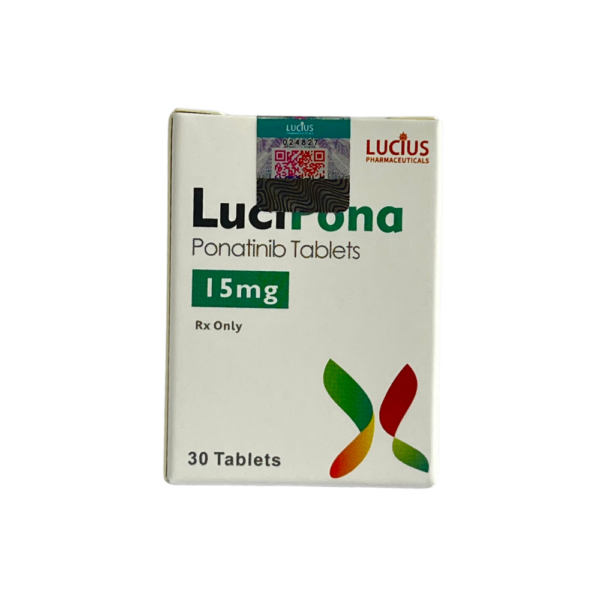
About Ponatinib
Ponatinib is a potent targeted small-molecule therapy developed for the treatment of resistant and genetically complex leukemias, where conventional treatments are no longer effective. It is best known for its activity against disease driven by mutations in the BCR-ABL tyrosine kinase, including mutations that confer resistance to earlier generations of therapy.
Chronic myeloid leukemia (CML) and certain forms of acute lymphoblastic leukemia (ALL) are driven by the BCR-ABL fusion protein, an abnormal kinase that continuously signals cells to divide. While first- and second-generation inhibitors can suppress this pathway, some mutations—most notably the T315I mutation—alter the kinase structure in a way that blocks drug binding and leads to treatment failure.
Ponatinib was specifically designed to overcome this challenge.
At the molecular level, Ponatinib is a pan-BCR-ABL tyrosine kinase inhibitor with a unique structural configuration that allows it to bind the altered kinase even in the presence of resistance-conferring mutations. Its design includes a flexible binding mode that avoids steric hindrance caused by mutations such as T315I, enabling continued inhibition of aberrant signaling where other inhibitors fail.
In addition to BCR-ABL, Ponatinib also inhibits several other kinases involved in cell growth and angiogenesis, including VEGFR, FGFR, and PDGFR. This broader activity contributes to its strong antileukemic effect but also requires careful clinical management to balance efficacy with safety.
Unlike traditional chemotherapy, Ponatinib does not act by indiscriminately killing rapidly dividing cells. Instead, it directly suppresses the molecular driver of leukemia, leading to reduced proliferation and improved control of malignant clones. Its clinical benefit is often observed in patients with advanced disease, multiple prior therapies, or genetically high-risk profiles.
From a pharmaceutical perspective, Ponatinib demands precise molecular consistency and controlled exposure. Because it is highly potent and used in patients with limited therapeutic options, even small variations in bioavailability or formulation can have significant clinical implications. Long-term treatment further emphasizes the importance of stable manufacturing and predictable pharmacokinetics.
Clinically, Ponatinib is typically reserved for situations where resistance has emerged or where specific mutations are present at diagnosis. Its role highlights an important principle of modern oncology: as cancer evolves under treatment pressure, therapies must be engineered to anticipate and overcome molecular escape mechanisms.
Overall, Ponatinib represents a critical advancement in targeted leukemia therapy. It demonstrates how rational molecular design, guided by deep understanding of resistance biology, can restore treatment options for patients with otherwise refractory disease. Its continued use underscores the importance of precision, adaptability, and molecular rigor in the management of advanced hematologic cancers.
Need Ponatinib?
Our pharmacists can confirm availability, pricing and what your country requires for import.