
Molecule
Tucatinib
Tucatinib is used in prescription treatment plans. Learn dosage guidance, side effects, precautions, and available strengths at Medsmonk.
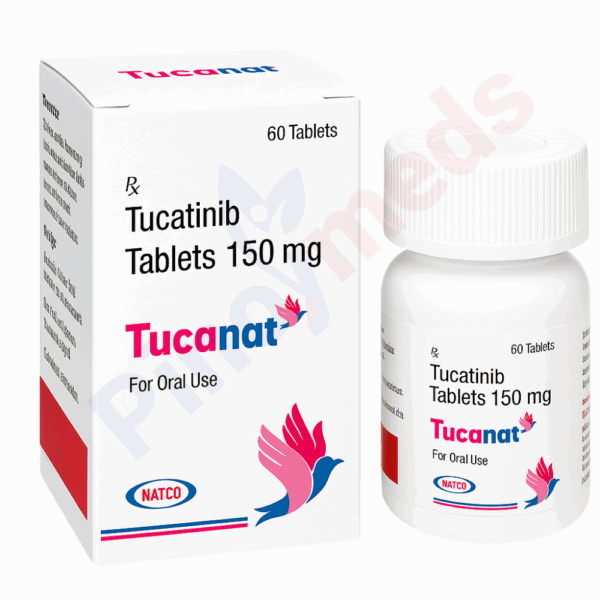

About Tucatinib
Overview of Tucatinib
Tucatinib is a highly selective, oral tyrosine kinase inhibitor (TKI) that targets the human epidermal growth factor receptor 2 (HER2) — a key driver in several aggressive cancers. By inhibiting HER2 signaling within cancer cells, tucatinib disrupts pathways that promote tumor growth and survival.
Generic Name: Tucatinib
Drug Class: HER2-selective Tyrosine Kinase Inhibitor
Route of Administration: Oral
Formulation: 50 mg and 150 mg tablets
Tucatinib is approved for use in combination therapy for HER2-positive metastatic breast cancer and HER2-positive, RAS wild-type metastatic colorectal cancer, particularly in patients who have progressed after prior anti-HER2 regimens. It is one of the few HER2-targeted therapies with proven clinical benefit in brain metastases, offering a meaningful survival advantage in this hard-to-treat population.
With its targeted mechanism, oral dosing convenience, and favorable tolerability profile, tucatinib represents a critical advancement in treating HER2-driven cancers.
Molecular Characteristics of Tucatinib
🧾 IUPAC Name:N-[4-[[4-[(3-chloro-4-fluorophenyl)amino]-7-methoxyquinazolin-6-yl]oxy]-3-methoxyphenyl]-6,6-dimethyl-5,6-dihydro-4H-pyran-2-carboxamide
Molecular Formula:C₂₆H₂₉ClN₆O₃
Molecular Weight:508.00 g/mol
CAS Registry Number:937263-43-9
Drug Class:
Tyrosine Kinase Inhibitor (TKI)
Highly selective for the HER2 receptor, with minimal activity on EGFR
Physical & Pharmaceutical Properties
Formulation: Oral film-coated tablets
Tablet Colors:
50 mg: white to off-white, oval-shaped tablet
150 mg: yellow, oval-shaped tablet
Both are debossed with identifying codes
Solubility:
Soluble in dimethyl sulfoxide (DMSO) and slightly soluble in aqueous solutions
Poor water solubility — hence formulated with excipients for oral absorption
Stability & Storage: Store at 20°C to 25°C (68°F to 77°F); excursions permitted to 15°C–30°C
Dosage & Administration
Route of Administration: Oral (by mouth)
Available Strengths:
50 mg tablet
150 mg tablet
Typically dosed as 150 mg twice daily (total 300 mg/day)
Mechanism of Action: How Tucatinib Inhibits HER2 Signaling
How Tucatinib Inhibits HER2
Tucatinib is a small-molecule tyrosine kinase inhibitor (TKI) that targets the intracellular kinase domain of the HER2 receptor (human epidermal growth factor receptor 2), a key driver of tumor growth in specific cancers.
Unlike non-selective TKIs inhibiting EGFR (HER1), tucatinib is highly selective for HER2, reducing off-target effects such as rash and diarrhea. Tucatinib binds reversibly and competitively to the ATP-binding site on HER2’s intracellular portion, preventing activation of downstream growth signals that promote cancer cell proliferation and survival.
Dual HER2 Blockade with Trastuzumab
While tucatinib works inside the cell, Trastuzumab — a monoclonal antibody — binds to the extracellular domain of HER2, preventing receptor dimerization and signaling from the cell surface.
When used together:
Trastuzumab blocks HER2 activity from the outside, preventing receptor activation and antibody-dependent cell-mediated cytotoxicity (ADCC).
Tucatinib blocks HER2 activity from the inside, inhibiting intracellular phosphorylation and signal transduction.
This dual HER2 blockade produces a synergistic anti-tumor effect, particularly in HER2-overexpressing tumors like certain breast and colorectal cancers.
Key Cellular Pathways Blocked
Once activated, HER2 triggers downstream pathways that support:
Cell growth
Survival
Angiogenesis
Resistance to apoptosis
Tucatinib blocks two central pro-survival signaling cascades:
PI3K/AKT/mTOR Pathway
Regulates cell growth, glucose metabolism, and resistance to cell death
HER2 signaling activates PI3K, which then activates AKT and mTOR
Tucatinib disrupts this cascade, leading to apoptosis and reduced tumor growth
RAS/RAF/MEK/ERK (MAPK) Pathway
Governs cell division and proliferation
By inhibiting HER2, tucatinib downregulates MAPK signaling that leads to reduced tumor proliferation and increased sensitivity to other treatments
Indications & Uses of Tucatinib
Tucatinib, available as TUKYSA® and in the generic version Tucaxin, is an FDA-approved oral HER2-selective tyrosine kinase inhibitor used to treat HER2-positive cancers.
HER2-Positive Metastatic Breast Cancer
Approved Indication:
Tucatinib is used in combination with Trastuzumab and capecitabine for the treatment of adult patients with advanced unresectable or metastatic HER2-positive breast cancer, including those with brain metastases, who have received one or more prior anti-HER2-based regimens in the metastatic setting.
Key Features:
Targets patients with HER2 gene amplification or overexpression
Effective in patients with active or stable brain metastases
Improves progression-free survival (PFS) and overall survival (OS)
Combines with standard agents to form a triple-therapy regimen
Approved Combination Therapy:
Tucatinib: 150 mg twice daily (oral)
Trastuzumab: IV or subcutaneous administration
Capecitabine: Oral prodrug of 5-FU, taken within 30 minutes after a meal
Tucatinib’s ability to cross the blood-brain barrier makes it particularly effective for managing CNS disease, a common challenge in metastatic HER2-positive breast cancer.
HER2-Positive, RAS Wild-Type Metastatic Colorectal Cancer (mCRC)
Approved Indication:
Tucatinib is used in combination with Trastuzumab for the treatment of adult patients with RAS wild-type, HER2-positive metastatic colorectal cancer, whose disease has progressed following fluoropyrimidine-, oxaliplatin-, and irinotecan-based chemotherapy.
Key Features:
Targets HER2 overexpression in RAS wild-type tumors
Offers a chemotherapy-free regimen
Provides tumor shrinkage and durable responses in a previously untreatable subset
Approved Combination Therapy:
Tucatinib: 150 mg twice daily (oral)
Trastuzumab: Typically administered IV
Tucatinib+Trastuzumab+Capecitabine marks the first HER2-directed regimen approved for mCRC — a significant advancement in personalized cancer treatment.
Summary of Therapy Combinations
Cancer Type
Tucatinib Used With
Indication
HER2+ Breast Cancer
Trastuzumab + Capecitabine
After ≥1 prior anti-HER2 regimen, including brain metastases
HER2+, RAS WT Colorectal CA
Trastuzumab
After prior chemo regimens (fluoropyrimidine, oxaliplatin, irinotecan)
Clinical Trials Supporting Tucatinib
Tucatinib’s clinical effectiveness has been demonstrated in two pivotal, multicenter trials — HER2CLIMB and MOUNTAINEER — which evaluated its safety, efficacy, and survival benefits in heavily pretreated patients with HER2-positive cancers.
HER2CLIMB Trial Summary
Study Title: HER2CLIMB – A Phase 2, Randomized, Double-Blind, Placebo-Controlled Trial
Indication: HER2-positive metastatic breast cancer
Combination Studied: Tucatinib + Trastuzumab + Capecitabine
Population:
612 adult patients with HER2+ unresectable locally advanced or metastatic breast cancer
All patients had received at least one prior HER2-directed therapy
Notably, 48% had brain metastases at baseline
Key Outcomes:
Progression-Free Survival (PFS):
7.8 months in the tucatinib group vs 5.6 months in the placebo group
Hazard Ratio (HR): 0.54 → 46% reduction in risk of disease progression or death
Overall Survival (OS):
21.9 months vs 17.4 months
HR: 0.66 → 34% reduction in risk of death
Objective Response Rate (ORR):
40.6% with tucatinib vs 22.8% with placebo
Brain Metastases Subgroup:
PFS (CNS subgroup):
7.6 months vs 5.4 months
HR: 0.48 → 52% reduction in CNS progression or death
Intracranial ORR:
47.3% (tucatinib group)
4.2% had a complete response
HER2CLIMB was the first randomized trial to include patients with active brain metastases — and showed significant benefit in this high-risk group.
MOUNTAINEER Trial Summary
Study Title: MOUNTAINEER – Phase 2, Open-Label, Multicenter Trial
Indication: HER2-positive, RAS wild-type metastatic colorectal cancer (mCRC)
Combination Studied: Tucatinib + Trastuzumab (no chemotherapy)
Population:
84 adult patients with HER2-positive, RAS wild-type mCRC
All had progressed on standard chemotherapy (fluoropyrimidine, oxaliplatin, irinotecan)
Key Outcomes:
Objective Response Rate (ORR):
38.1% (confirmed partial or complete response)
Complete Response: 3.6%
Partial Response: 35%
Median Duration of Response (DoR):
12.4 months
Some responses lasted over 2 years
Disease Control Rate (DCR):
71.4% (responses + stable disease)
MOUNTAINEER provided the basis for the first HER2-targeted treatment approval in colorectal cancer and represents a breakthrough in personalized medicine for mCRC.
Efficacy Summary Table
Trial
Indication
PFS
OS
ORR
Brain Met Response
HER2CLIMB
HER2+ Breast Cancer
7.8 mo vs 5.6
21.9 mo vs 17.4
40.6% vs 22.8%
52% ↓ CNS progression
MOUNTAINEER
HER2+, RAS WT mCRC
—
—
38.10%
Not applicable
Clinical Impact
Tucatinib + Trastuzumab + capecitabine is now considered a standard regimen for HER2+ metastatic breast cancer, especially with brain involvement.
Tucatinib + Trastuzumab provides a chemotherapy-free alternative for HER2+ colorectal cancer — offering efficacy with better tolerability.
Pharmacokinetics of Tucatinib
Tucatinib exhibits well-defined pharmacokinetic (PK) properties that support its efficacy, tolerability, and twice-daily oral dosing schedule. Below are the key parameters related to its absorption, metabolism, distribution, and elimination, along with how the drug behaves in systemic circulation.
Absorption & Tmax (Time to Peak Concentration)
After oral administration, tucatinib is moderately absorbed into the systemic circulation.
Time to Peak (Tmax): Approximately 2 to 4 hours after oral dosing
Food Effect:
Tucatinib may be taken with or without food
High-fat meals do not significantly impact overall exposure
Bioavailability: Approximate absolute bioavailability is ~40%
This allows for flexible dosing schedules and convenient home administration.
Metabolism
Tucatinib undergoes extensive hepatic metabolism, primarily via cytochrome P450 enzymes.
Major Pathways:
CYP2C8 – Primary contributor
CYP3A4 – Secondary pathway
Metabolites:
Tucatinib is metabolized to inactive metabolites
These are not believed to contribute to efficacy or toxicity
Drug-Drug Interaction Caution:
Co-administration with strong CYP2C8 or CYP3A4 inhibitors or inducers may alter tucatinib plasma levels
Avoid: St. John’s Wort, rifampin, and other strong CYP inducers
Plasma Protein Binding
Tucatinib exhibits high plasma protein binding, estimated at ~97%
This influences its distribution and helps maintain effective drug levels in systemic circulation
Despite high protein binding, the free (active) concentration remains sufficient to inhibit HER2 kinase activity
Elimination
Half-Life (t½): Approximately 8.5 hours→ Supports twice-daily dosing
Route of Excretion:
Feces (primary): ~86%
Urine (renal): ~4%
Clearance:
Primarily non-renal
Driven largely by hepatic metabolism and biliary elimination
Plasma Concentration Curve (Typical PK Profile)
Y-axis: Plasma concentration (ng/mL)
X-axis: Time (hours)
Curve Details:
Rapid rise to peak at ~3 hours
Gradual decline following first-order kinetics
Minimal accumulation at steady-state with BID dosing
No significant food-related fluctuation
Parameter
Value
Bioavailability
~40%
Tmax
2–4 hours
Half-life (t½)
~8.5 hours
Protein Binding
~97%
Primary Metabolism
CYP2C8 (major), CYP3A4 (minor)
Excretion
~86% feces, ~4% urine
Here is the simulated plasma concentration-time curve for Tucatinib following oral administration. It illustrates:
Tmax (~2–4 hours): the point where peak plasma concentration occurs
Absorption Phase: rapid increase due to bioavailability and ka
Elimination Phase: gradual decline as the drug is metabolized and excreted
Dosage & Administration of Tucatinib (TUKYSA®)
Tablet Strengths
Tucatinib is available in two oral film-coated tablet strengths, designed to support accurate dosing and flexible titration based on the treatment regimen:
50 mg tablet
Appearance: White to off-white, oval-shaped
Debossed with identifying code (e.g., “TUC 50”)
150 mg tablet
Appearance: Yellow, oval-shaped
Debossed with identifying code (e.g., “TUC 150”)
Tablets are packaged in bottles and should be stored at 20°C to 25°C (68°F to 77°F).
Recommended Dose & Schedule
Standard Dose:
150 mg orally, twice daily (every ~12 hours)
Total daily dose: 300 mg
Administration Duration:
Administered continuously until disease progression or unacceptable toxicity
Dosing Time Guidance
Take at consistent times each day (e.g., 8 AM and 8 PM)
Maintain a ~12-hour interval between doses
How to Take Tucatinib
With or Without Food:Tucatinib may be taken regardless of meals. Food does not significantly impact its absorption.
Swallow Whole:
Take tablets whole with water
Do not crush, split, or chew
Missed Dose Instructions:
If a dose is missed, skip it
Continue with the next scheduled dose
Do not double the dose to compensate
Treatment Duration
Ongoing Therapy:
Continue until disease progression or development of intolerable side effects
Dose Modification:
May pause or reduce dosage based on toxicity management protocols
Particularly for severe diarrhea or elevated liver enzymes
Combination Regimen Guidance
Tucatinib is not used as monotherapy — it is always prescribed as part of a combination regimen based on cancer type:
HER2-Positive Metastatic Breast Cancer
Triple Therapy Regimen:
Tucatinib: 150 mg twice daily (oral)
Trastuzumab: IV or subcutaneous injection (dose per label)
Capecitabine: 1000 mg/m² orally, twice daily for 14 days, followed by a 7-day rest (21-day cycle)
Must be taken within 30 minutes after a meal
Patients must have received at least one prior anti-HER2 regimen in the metastatic setting.
HER2+, RAS Wild-Type Metastatic Colorectal Cancer
HER2+, RAS Wild-Type Metastatic Colorectal Cancer
Dual Therapy Regimen:
Tucatinib: 150 mg twice daily (oral)
Trastuzumab: IV infusion every 3 weeks (or as clinically indicated)
This chemotherapy-free regimen is the first HER2-targeted treatment approved in this indication.
Parameter
Detail
Available Strengths
50 mg and 150 mg tablets
Recommended Dose
150 mg twice daily (300 mg/day)
Administration
Oral, with or without food
Tablet Instructions
Swallow whole, do not crush/split
Duration
Until progression or toxicity
Combinations
Trastuzumab ± Capecitabine
Safety Profile of Tucatinib
Tucatinib, a selective HER2-directed tyrosine kinase inhibitor, has a generally manageable safety profile, especially when used in combination with Trastuzumab and capecitabine. However, it may cause certain adverse events that require dose modification, temporary interruption, or discontinuation.
Common Adverse Reactions
(Based on pooled safety data from the HER2CLIMB trial)
The most common side effects (all grades) reported in patients receiving tucatinib + Trastuzumab + capecitabine include:
Risk Area
Monitoring / Guidance
Grade ≥3
Hepatotoxicity
LFTs every 3 weeks; interrupt or reduce dose if Grade ≥3 elevations
12%
Diarrhea
Early intervention with antidiarrheals; hydrate; adjust dose if needed
13%
Pregnancy
Avoid use; use contraception; risk of fetal harm
2%
Lactation
Discontinue breastfeeding during and for 1 week after last dose
4%
Liver Impairment
Use caution in severe hepatic dysfunction; monitor LFTs closely
2%
Drug Interactions
Avoid strong CYP2C8/CYP3A4 inhibitors or inducers
6% (ALT), 4% (AST)
Stomatitis (mouth sores)
27%
1%
Decreased appetite
23%
<1%
Headache
22%
<1%
Anemia
19%
4%
Most side effects are reversible with supportive care or dose adjustment.
Serious Risks and Warnings
Tucatinib carries several clinically significant risks that require proactive monitoring:
Hepatotoxicity
Elevations in ALT, AST, and bilirubin have been reported.
Can be severe or life-threatening in rare cases.
Monitoring recommendation:
LFTs prior to starting therapy and every 3 weeks during treatment.
Management:
Dose reduction, interruption, or discontinuation based on severity.
Severe Diarrhea
Can result in dehydration, hypotension, renal dysfunction.
Usually occurs within the first month of treatment.
Management:
Early use of antidiarrheals (e.g., loperamide)
Oral fluid intake and electrolyte management
Fetal Harm (Embryo-Fetal Toxicity)
Tucatinib can cause fetal harm when administered to a pregnant woman.
Mechanism: HER2 is involved in fetal development (especially cardiac tissue).
Contraception guidance:
Females of reproductive potential must use effective contraception during treatment and for at least 1 week after the final dose.
Pregnancy
Contraindicated unless no alternatives exist and the potential benefit outweighs the risk.
Preclinical animal studies showed embryotoxicity and fetal malformations.
Pregnancy testing is recommended before initiation of therapy.
Lactation
It is unknown if tucatinib is excreted in human milk.
Due to the potential for serious adverse reactions in infants:
Breastfeeding is not recommended during treatment and for at least 1 week after the last dose.
Hepatic Impairment
The liver metabolizes Tucatinib.
No dose adjustment is required for mild to moderate liver impairment.
Caution is advised in patients with severe hepatic impairment, although specific dosing recommendations have not been established due to limited data.
Renal Impairment
No clinically meaningful differences in pharmacokinetics were observed in patients with mild to moderate renal impairment.
Data are limited for severe renal impairment (eGFR <30 mL/min).
Key Safety Recommendations
Risk Area
Monitoring / Guidance
Hepatotoxicity
LFTs every 3 weeks; interrupt or reduce dose if Grade ≥3 elevations
Diarrhea
Early intervention with antidiarrheals; hydrate; adjust dose if needed
Pregnancy
Avoid use; use contraception; risk of fetal harm
Lactation
Discontinue breastfeeding during and for 1 week after last dose
Liver Impairment
Use caution in severe hepatic dysfunction; monitor LFTs closely
Drug Interactions
Avoid strong CYP2C8/CYP3A4 inhibitors or inducers
Prescribing Considerations and Risk Management for Tucatinib
Boxed Warnings
Tucatinib does not currently carry an FDA boxed warning (also known as a black box warning).
However, it includes serious precautions related to hepatotoxicity, embryo-fetal toxicity, and severe diarrhea, which must be carefully monitored.
Liver Function Monitoring
Rationale:
Tucatinib is primarily metabolized in the liver and has been associated with transient or severe elevations in liver enzymes (ALT, AST, bilirubin). Cases of hepatotoxicity have led to dose modification or treatment discontinuation in clinical trials.
Monitoring Guidelines:
Perform baseline liver function tests (LFTs) before starting therapy.
Monitor ALT, AST, and total bilirubin every 3 weeks during treatment.
Increase monitoring frequency if elevated liver enzymes are detected.
Management:
Grade 1–2 (mild/moderate): Continue with close monitoring.
Grade 3 (severe): Interrupt treatment and resume at a reduced dose once resolved.
Grade 4 or persistent Grade ≥3: Discontinue tucatinib permanently.
Co-administration with hepatotoxic agents may increase the risk.
Drug–Drug Interactions (DDIs)
Metabolic Pathways:
Tucatinib is metabolized primarily by CYP2C8 and to a lesser extent by CYP3A4.
Avoid Co-Administration With:
Type
Examples
Effect
CYP3A/2C8 inducers
Rifampin, carbamazepine, St. John’s Wort
Decrease tucatinib levels → reduced efficacy
CYP3A/2C8 inhibitors
Ketoconazole, gemfibrozil, clarithromycin
Increase tucatinib exposure → increased toxicity risk
Recommendations:
Avoid strong inhibitors/inducers.
Monitor for toxicity if moderate inhibitors are required.
Review all patient medications (including herbal supplements) for interaction risk.
Contraceptive Use & Pregnancy Prevention
Embryo-Fetal Toxicity Risk:
Tucatinib can cause fetal harm based on mechanism of action and animal data.HER2 plays a role in fetal cardiac and neural development.
Contraceptive Guidance:
Females of reproductive potential must use effective contraception during treatment and for at least 1 week after the last dose.
Pregnancy testing is recommended prior to initiating therapy.
Male patients with partners of childbearing potential should also use effective contraception during treatment and for 1 week after the final dose.
Counsel patients on contraceptive options and the importance of adherence.
Prescriber Takeaway
Risk Area
Prescribing Action
Hepatotoxicity
LFTs q3w; reduce or stop for Grade ≥3 elevations
CYP-mediated Interactions
Avoid strong CYP2C8/CYP3A4 modulators
Pregnancy/Fertility
Contraception required; test before starting
Severe Adverse Reactions
Discontinue if toxicity persists or becomes life-threatening
Breastfeeding
Avoid during treatment and for ≥1 week after stopping
Blood–Brain Barrier (BBB) Activity of Tucatinib
The Challenge of Brain Metastases in HER2-Positive Cancers
In HER2-positive metastatic breast cancer, brain metastases occur in up to 50% of patients. The blood–brain barrier (BBB) limits the entry of many anti-cancer drugs into the CNS.
Traditional HER2-targeted therapies like Trastuzumab have limited BBB penetration, leading to poor outcomes in patients with brain metastases.
Tucatinib’s CNS Penetration: A Key Innovation
Tucatinib, a small-molecule HER2-selective TKI, can penetrate the BBB and treat HER2-positive tumors within the CNS.
Key Pharmacologic Features:
Small size and lipophilic structure enhance BBB permeability
Selective HER2 targeting reduces systemic toxicity
Demonstrated CNS tumor reduction and delay in progression in clinical trials
Tucatinib reaches therapeutic concentrations in brain tissue, directly acting on intracranial lesions.
Clinical Evidence of CNS Activity
HER2CLIMB Trial CNS Subgroup Analysis:
48% of enrolled patients had brain metastases (active or stable)
52% reduction in risk of CNS progression or death (HR = 0.48; 95% CI: 0.34–0.69)
Intracranial Outcomes:
Median PFS: 7.6 months (Tucatinib) vs 5.4 months (control)
Intracranial ORR: 47.3% (Tucatinib group)
Clinical Benefit Rate (CBR): 70.1%
CNS-Specific Benefits:
Delayed need for whole-brain radiation therapy (WBRT)
Controlled CNS progression
Prolonged survival in patients with active brain metastases
Tucatinib is the first and only HER2-targeted therapy with Phase 2 randomized trial evidence of CNS-specific efficacy.
Unique Benefit Over Similar Agents
Feature
Tucatinib
Lapatinib
Neratinib
Trastuzumab
BBB Penetration
High
Moderate
Moderate
Very limited
Selectivity for HER2 vs EGFR
High (HER2 only)
Low (HER2 & EGFR)
Low (HER2 & EGFR)
HER2 only
CNS Response (Clinical Trials)
Proven in HER2CLIMB
Limited
Observed in ExteNET
Minimal
Tolerability Profile
Favorable
Higher GI toxicity
Higher GI/liver tox
Well-tolerated
Tucatinib’s high selectivity for HER2 and limited EGFR inhibition translate to fewer side effects (e.g., less diarrhea and rash), making it better tolerated and suitable for longer CNS-directed therapy.
Regulatory Approvals
U.S. Food and Drug Administration (FDA)
Initial Approval:
Date: April 17, 2020
Indication: Tucatinib + Trastuzumab + Capecitabine for HER2-positive metastatic breast cancer, including brain metastases, after prior anti-HER2 regimens.
Expanded Approval:
Date: January 19, 2023
Indication: Tucatinib + Trastuzumab for RAS wild-type, HER2-positive mCRC, after prior chemotherapy (fluoropyrimidine, oxaliplatin, irinotecan).
International Regulatory Approvals
European Medicines Agency (EMA)
Authorization Date: February 2021
Indication: HER2-positive metastatic breast cancer
Approval Type: Centralized across EU countries
Health Canada
Approval Date: August 2020
Indication: HER2-positive metastatic breast cancer after anti-HER2 therapy
Therapeutic Goods Administration (TGA – Australia)
Indication: HER2+ breast cancer with CNS disease
Access: Distributed via national oncology programs
Food and Drug Administration – Global
Tucatinib (TUKYSA®) is approved for use in HER2-positive breast cancer
Expansion to colorectal indication pending or under review (based on region)
Global approvals are based primarily on HER2CLIMB and MOUNTAINEER clinical trial results.
Regulatory Summary Table
Agency
Indication Approved
Approval Year
FDA (US)
HER2+ breast cancer; HER2+, RAS WT mCRC
2020, 2023
EMA (EU)
HER2+ metastatic breast cancer
2021
Health Canada
HER2+ metastatic breast cancer
2020
TGA (AUS)
HER2+ metastatic breast cancer (CNS disease)
2021
FDA-PH (Global)
HER2+ metastatic breast cancer
Approved
Downloads & Resources
Prescribing info (PDF)
Patient brochure
MOA animation video
Clinical trial data sheet
HCP prescribing toolkit
Need Tucatinib?
Our pharmacists can confirm availability, pricing and what your country requires for import.