
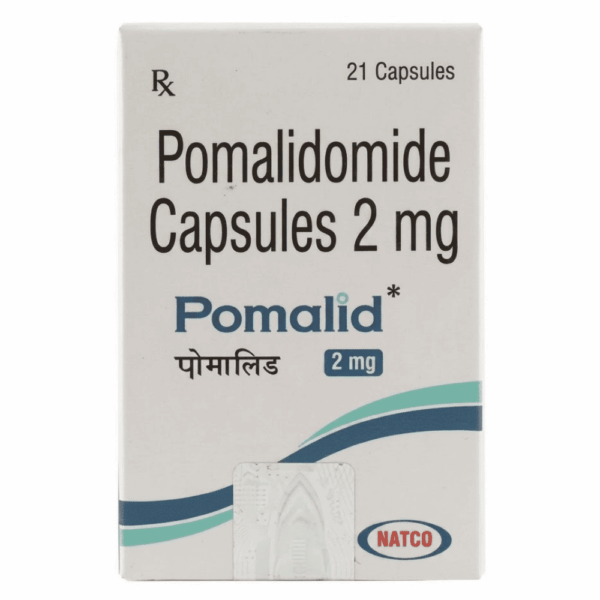

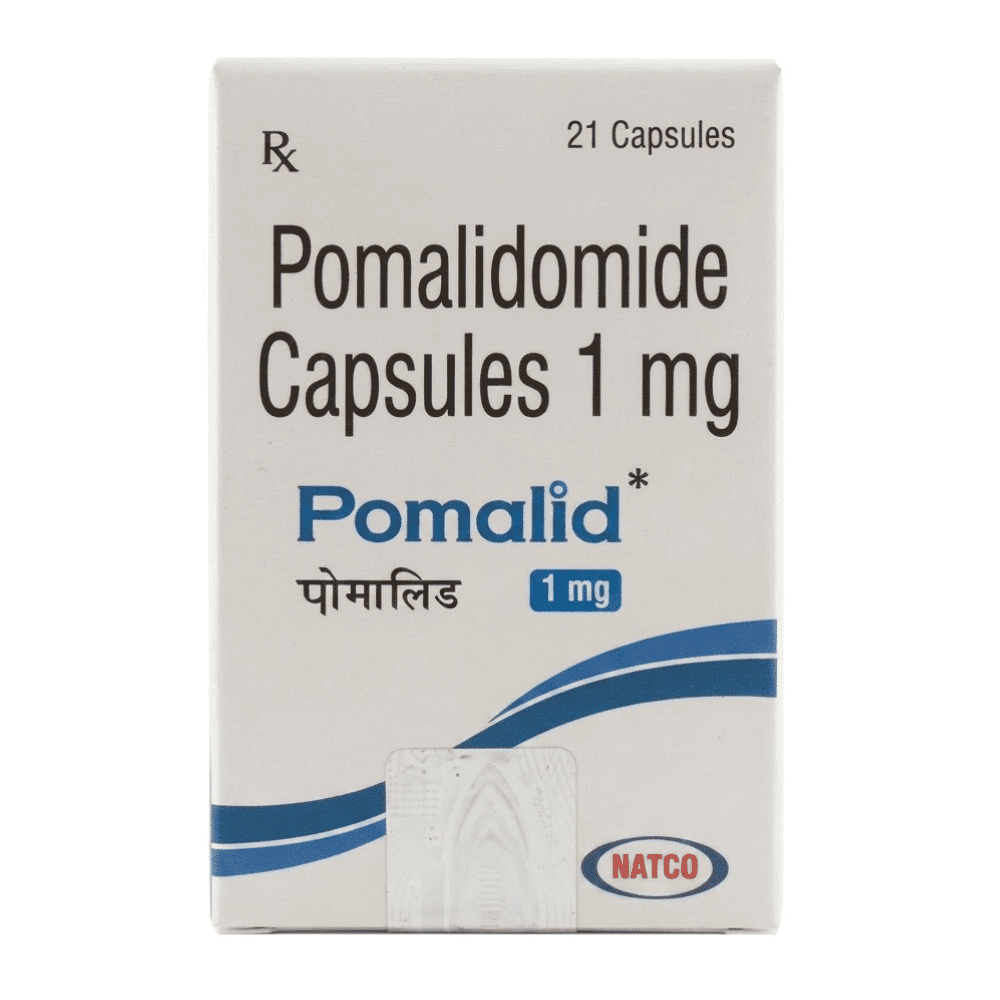
Pomalid 1 Mg Capsule
Brand Name: Pomalid
Molecule: Pomalidomide
Strength: 1 mg
Quantity: 21 Capsules
Form: Capsule
Packaging Type: Bottle
Manufacturer/Marketed By: Natco Pharma
Country of Origin: India
Request Pricing & Availability
Fill in your details below and our clinical team will get back to you with pricing & availability within 24 hours.
Similar Products

Description
Comprehensive Patient & Clinician Guide to Pomalid 1mg Capsule (Pomalidomide)
Pomalid 1mg Capsule is an advanced prescription anti-cancer medication classified as a third-generation immunomodulatory agent (IMiD). Manufactured by Natco Pharma Ltd., each hard gelatin capsule contains 1 mg of pomalidomide.
Pomalidomide is prescribed under specialist oncology/hematology supervision primarily for adult patients with relapsed or refractory multiple myeloma (a cancer of bone marrow plasma cells) and specific presentations of Kaposi sarcoma.
As a next-generation analogue of thalidomide and lenalidomide, pomalidomide is designed with significantly enhanced therapeutic potency, allowing it to overcome drug resistance when earlier lines of therapy stop working.
Molecular Pharmacology & Mechanism of Action
To understand how Pomalid works, it helps to examine how malignant plasma cells survive and evade the immune system within the bone marrow microenvironment.
In multiple myeloma, cancerous plasma cells suppress normal immune surveillance, stimulate osteoclasts (causing painful bone destruction), and induce local blood vessel growth to sustain their survival.
-
Cereblon (CRBN) Binding: Pomalidomide binds directly to cereblon, the primary substrate-recognition component of the cullin-RING E3 ubiquitin ligase protein complex.
-
Selective Protein Degradation: This binding alters the ligase's activity, targeting two essential B-cell transcription factors—Ikaros (IKZF1) and Aiolos (IKZF3)—for rapid ubiquitination and degradation.
-
Direct Cytotoxicity: The loss of Ikaros and Aiolos downregulates IRF4 and MYC oncogenes, arresting the cell cycle and triggering programmed cell death (apoptosis) in myeloma cells—even in strains resistant to lenalidomide or bortezomib.
-
Immunomodulation: Pomalid stimulates cytotoxic T-lymphocytes and Natural Killer (NK) cells to mount a stronger immune attack against residual cancer cells while suppressing pro-inflammatory cytokines like TNF-$\alpha$ and IL-6.
-
Anti-Angiogenic & Bone Support: It inhibits vascular endothelial growth factors, cutting off tumor blood vessel formation and slowing myeloma-induced bone lesions.
Approved Therapeutic Indications
Pomalid 1mg Capsule is indicated for adult patients in specific hematologic and oncologic settings:
-
Relapsed & Refractory Multiple Myeloma (RRMM): Prescribed in combination with low-dose dexamethasone for adult patients with multiple myeloma who have received at least two prior therapies (including both lenalidomide and a proteasome inhibitor such as bortezomib) and have demonstrated disease progression on or within 60 days of completion of the last therapy.
-
Kaposi Sarcoma (KS):
-
Indicated for adult patients with AIDS-related Kaposi sarcoma whose disease has failed to respond to or progressed on standard anti-retroviral therapy (cART).
-
Indicated for adult patients with HIV-negative Kaposi sarcoma.
-
Standard Dosage and Administration Guidelines
Pomalid therapy must be initiated and monitored by a hematologist or oncologist experienced in managing immunomodulatory treatments.
Standard 28-Day Treatment Cycle (Multiple Myeloma)
-
Standard Daily Dose: The typical recommended starting dose is 4 mg taken orally once daily on Days 1 through 21 of repeated 28-day cycles. (The 1mg capsule strength is used to achieve tailored starting doses, step-down modifications, or individualized dosing regimens).
-
Rest Period: Days 22 through 28 serve as a 7-day rest period (no pomalidomide taken).
-
Co-Administered Dexamethasone: Low-dose dexamethasone (typically 40 mg daily for patients $\le$ 75 years, or 20 mg daily for patients > 75 years) is taken on Days 1, 8, 15, and 22 of each 28-day cycle.
-
Timing & Food: Take Pomalid at the same time every day, with or without food.
-
Swallow Whole: Swallow the capsule whole with a full glass of water. Do not chew, crush, break, or open the capsule. Direct inhalation or skin contact with the powder inside must be strictly avoided.
-
Missed Dose Instructions: If you miss a dose by less than 12 hours, take it as soon as you remember. If more than 12 hours have passed since your scheduled time, skip the missed dose and resume your normal schedule the next day. Never take two doses at the same time.
Potential Side Effects & Clinical Management Strategies
Because Pomalid exerts potent effects on bone marrow function and the immune system, regular clinical vigilance is essential.
Common Side Effects
| Organ System | Common Symptoms | Clinical Management |
| Hematologic | Neutropenia, anemia, thrombocytopenia, leukopenia. | Monitored via regular Complete Blood Counts (CBC). Growth factor support (G-CSF) or dose reduction may be prescribed. |
| Constitutional | Fatigue, weakness (asthenia), fever, dizziness, headache. | Schedule daytime rest, stay hydrated, and maintain light physical activity if cleared by your doctor. |
| Gastrointestinal | Constipation, diarrhea, nausea, decreased appetite. | Increase dietary fiber and fluids for constipation; antidiarrheal medications (e.g., loperamide) may be prescribed if needed. |
| Respiratory & Musculoskeletal | Upper respiratory tract infections, cough, shortness of breath, bone or back pain, muscle spasms. | Report fever or breathing difficulty immediately; analgesic medications may be adjusted for bone pain. |
Serious Adverse Reactions (Require Immediate Emergency Care)
1. Severe Embryo-Fetal Toxicity (Boxed Warning)
Pomalidomide is an analogue of thalidomide and is a known human teratogen. Even a single capsule taken during pregnancy can cause severe, life-threatening birth defects or fetal death. Strict reproductive safety programs (REMS) are mandatory.
2. Venous & Arterial Thromboembolism (Boxed Warning)
Patients taking Pomalid have a significantly elevated risk of developing deep vein thrombosis (DVT), pulmonary embolism (PE), myocardial infarction, and stroke.
-
Symptoms: Pain, warmth, or swelling in the legs/arms, sudden chest pain, shortness of breath, coughing up blood, or sudden facial numbness/weakness.
-
Preventative Strategy: Prophylactic anti-thrombotic therapy (such as low-dose aspirin, low-molecular-weight heparin, or direct oral anticoagulants) is standard for all patients unless medically contraindicated.
3. Severe Myelosuppression & Opportunistic Infections
Profound neutropenia can increase vulnerability to life-threatening bacterial or fungal infections. Seek emergency medical care for any fever $\ge$ 100.4°F (38°C), shaking chills, or productive cough.
4. Severe Cutaneous Reactions
Rare occurrences of Stevens-Johnson Syndrome (SJS), Toxic Epidermal Necrolysis (TEN), or Drug Reaction with Eosinophilia and Systemic Symptoms (DRESS). Any peeling skin or widespread rash requires immediate discontinuation.
Precautions & Mandatory Safety Monitoring Protocols
Due to the risk of hematologic toxicity and blood clots, patients taking Pomalid require a structured schedule of baseline tests and ongoing monitoring.
Essential Laboratory Monitoring
| Parameter | Recommended Frequency | Clinical Rationale |
| Complete Blood Count (CBC) | Baseline, weekly for the first 8 weeks, then monthly thereafter | Detects neutropenia (ANC < 500/$\mu$L) and thrombocytopenia early to guide dose holds or reductions. |
| Pregnancy Testing (Females) | 2 tests prior to initiation, weekly during first 4 weeks, then monthly (or every 2 weeks if irregular) | Strictly verifies negative pregnancy status before every new prescription is dispensed. |
| Renal Function (eGFR / CrCl) | Baseline and periodic | Evaluates kidney function; severe renal impairment (CrCl < 30 mL/min) or hemodialysis requires a reduced starting dose of 3 mg daily. |
| Liver Function Tests (LFTs) | Baseline and periodic | Monitors liver transaminases and bilirubin to detect early drug-induced liver injury. |
Strict Reproductive & Contraception Precautions (REMS Program)
Because pomalidomide causes severe birth defects:
-
For Female Patients of Reproductive Potential:
-
Must commit to either complete sexual abstinence or use two reliable forms of effective contraception simultaneously (at least one highly effective method such as an IUD, tubal ligation, or hormonal birth control, plus a barrier method like a male condom).
-
Contraception must begin at least 4 weeks before starting Pomalid, continue throughout active treatment and dose interruptions, and persist for at least 4 weeks after the final dose.
-
-
For Male Patients:
-
Pomalidomide is present in human semen. Men taking Pomalid must always use a latex or synthetic condom during any sexual contact with females of reproductive potential or pregnant women, during treatment, and for at least 4 weeks after stopping therapy (even after a vasectomy).
-
Male patients must not donate sperm or semen while taking Pomalid and for 4 weeks post-treatment.
-
-
Blood Donation Restriction: All patients must not donate blood during therapy and for at least 4 weeks following the last dose to prevent transferring the drug to a pregnant recipient.
Drug & Substance Interactions
Pomalidomide is cleared partly through hepatic metabolism by the enzymes CYP1A2 and CYP3A4, as well as through renal excretion.
-
Strong CYP1A2 Inhibitors (e.g., Fluvoxamine, Ciprofloxacin): Inhibit the breakdown of pomalidomide, significantly raising its concentration in the blood and increasing toxicity risks. If combined use cannot be avoided, the Pomalid dose is generally reduced by 50%.
-
Strong CYP3A4 / P-gp Inducers (e.g., Rifampin, Carbamazepine, St. John's Wort): Accelerate pomalidomide clearance, reducing blood levels and decreasing anti-cancer efficacy. Avoid concurrent use.
-
Smoking Interaction: Cigarette smoking induces CYP1A2 activity, which can lower blood levels of pomalidomide. Patients should inform their doctor if they smoke.
-
Hormonal Contraceptive / Thrombosis Risk: Using combined oral contraceptives while taking Pomalid with dexamethasone further elevates thromboembolic (blood clot) risks, requiring careful selection of birth control methods.
Storage, Handling, and Regulatory Compliance
-
Storage Conditions: Store Pomalid 1mg Capsules at room temperature between 20°C and 25°C (68°F to 77°F). Protect from excessive heat, moisture, and direct light.
-
Safe Handling Precautions:
-
Keep strictly out of reach of children and pets.
-
Females who are pregnant or planning to become pregnant must never handle or touch Pomalid capsules without gloves.
-
If a capsule is accidentally broken, avoid breathing any powder and wash the skin thoroughly with soap and water.
-
-
Manufacturing Standards: Manufactured by Natco Pharma Ltd., Pomalid is produced in pharmaceutical facilities adhering to WHO-GMP and ISO quality standards to ensure high chemical purity and uniform dosing.
Frequently Asked Questions (FAQs)
Q1: What makes Pomalid different from Lenalidomide (Revlimid)?
Pomalid (pomalidomide) is a third-generation immunomodulatory drug that is significantly more potent at binding to the cereblon receptor than lenalidomide. Because of this enhanced molecular affinity, Pomalid remains clinically effective in multiple myeloma patients whose disease has become refractory or resistant to lenalidomide and proteasome inhibitors.
Q2: Why do I need to take a blood thinner while on Pomalid?
When pomalidomide is combined with dexamethasone, the risk of developing blood clots in the deep veins (DVT) or lungs (PE) rises significantly. To keep you safe, your doctor will routinely prescribe a preventative blood thinner—such as low-dose aspirin or an anticoagulant—throughout your treatment cycle.
Q3: Can I open the 1mg capsule and mix the powder with juice if I cannot swallow it?
No. Never open, break, crush, or chew Pomalid capsules. Opening the capsule exposes you and your caregivers to hazardous cytotoxic powder and alters how the medication absorbs into your body. If you experience severe difficulty swallowing capsules, discuss alternative management strategies directly with your oncologist.
Q4: What should I do if I develop a fever during the rest week (Days 22–28)?
Even though you are not taking capsules during your rest week, your immune system and white blood cell count may still be suppressed. Treat any fever of 100.4°F (38°C) or higher as a medical emergency and contact your oncology care team immediately.
Medical Disclaimer
This clinical guide is strictly for educational and informational purposes and should not replace professional medical advice, diagnosis, or treatment. Always consult a qualified oncologist or hematologist before starting, stopping, or altering any anti-cancer regimen or prescription medication schedule.
References
-
National Center for Biotechnology Information (NCBI):
-
StatPearls Review: Pomalidomide Pharmacology, Indications, and Clinical Safety Profile. https://www.ncbi.nlm.nih.gov/books/NBK557620/
-
PMC Clinical Studies: Pomalidomide in Relapsed and Refractory Multiple Myeloma Management. https://pmc.ncbi.nlm.nih.gov/articles/PMC3628169/
-
-
U.S. Food and Drug Administration (FDA):
-
POMALYST (pomalidomide) Full Prescribing Information & REMS Safety Guidelines. https://www.accessdata.fda.gov/drugsatfda_docs/label/2020/204026s026lbl.pdf
-
-
DailyMed (U.S. National Library of Medicine):
-
Pomalidomide Capsule Drug Label & Package Insert. https://dailymed.nlm.nih.gov/dailymed/drugInfo.cfm?setid=41400b90-b64e-447b-90f3-1cad58050eba
-
-
Mayo Clinic:
-
Pomalidomide (Oral Route) Description, Dosage, and Side Effects. https://www.mayoclinic.org/drugs-supplements/pomalidomide-oral-route/description/drg-20060888
-
Related Products
-
Lenvitib 10 mg Capsule
LenvatinibPrice on request
Request pricing -
Lucimird 1 mg Capsule
Price on request
Request pricing -
Luciorfor 17.2 mg Tablet
Price on request
Request pricing -
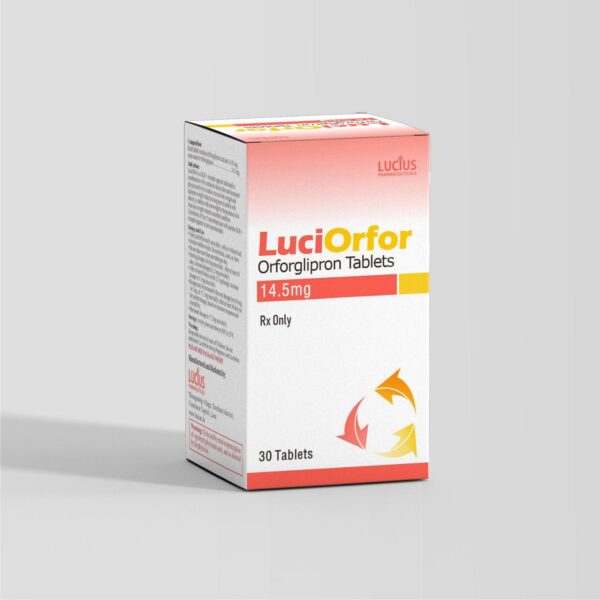
Luciorfor 14.5 mg Tablet
Price on request
Request pricing -
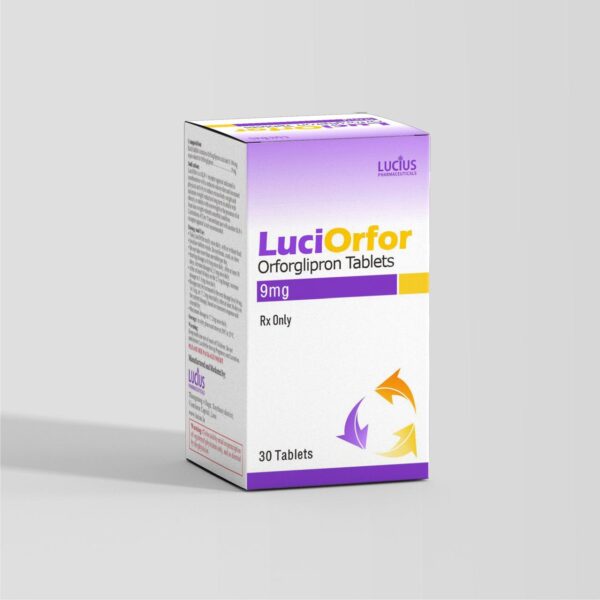
Luciorfor 9 mg Tablet
Price on request
Request pricing -
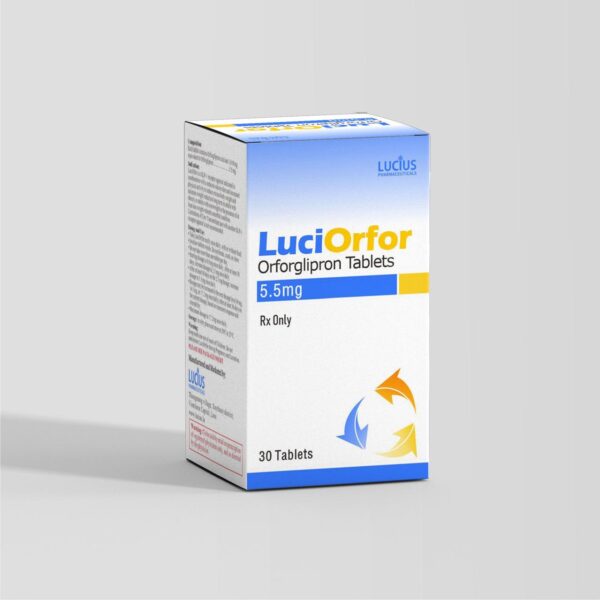
Luciorfor 5.5 mg Tablet
Price on request
Request pricing -
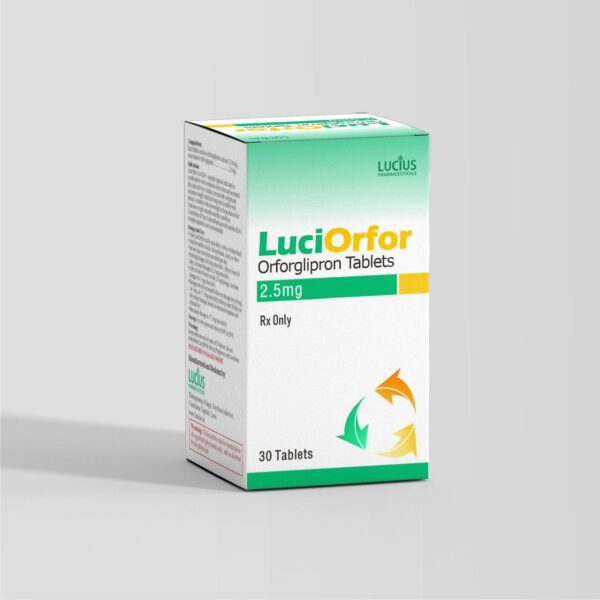
Luciorfor 2.5 mg Tablet
Price on request
Request pricing -
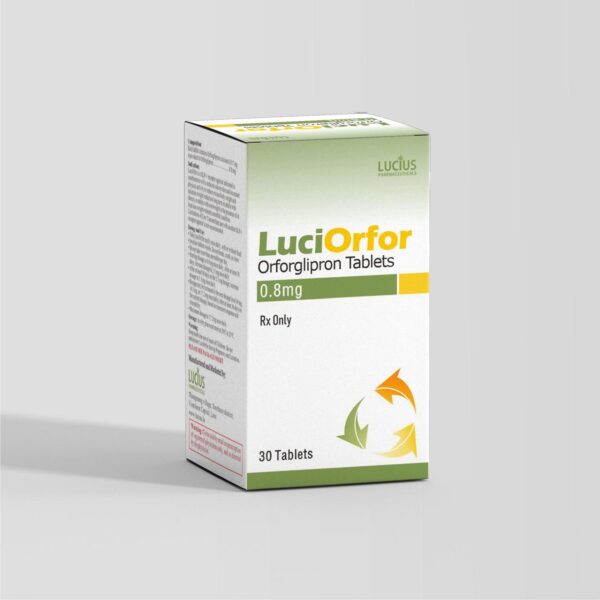
Luciorfor 0.8 mg Tablet
Price on request
Request pricing -
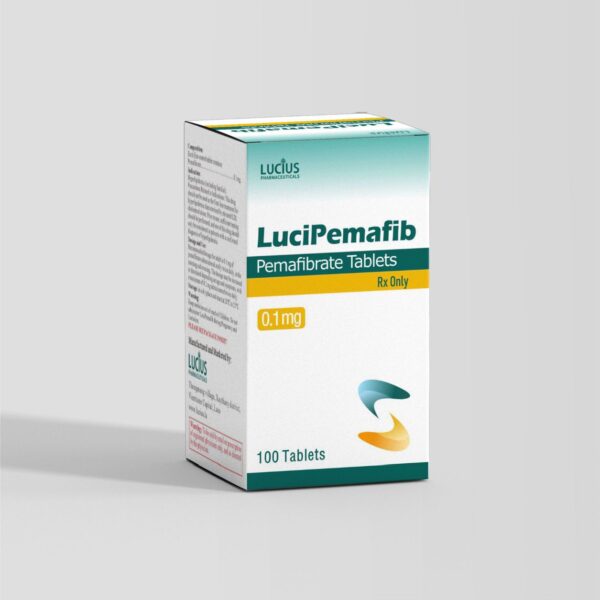
LuciPemafib 0.1 mg Tablet
Price on request
Request pricing -
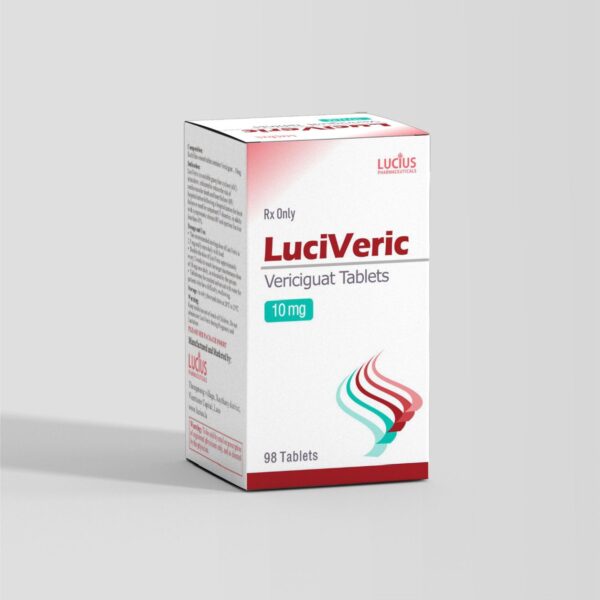
LuciVeric 10 mg Tablet
Price on request
Request pricing -
LuciLemb 5 mg Tablet
Price on request
Request pricing -
LuciElag 200 mg Tablet
Price on request
Request pricing
Related Reading
-
 Bone Marrow Transplant: A Complete Guide for Patients
The realization that you or someone close to you needs a bone marrow transplant can be extremely daunting. It may
Bone Marrow Transplant: A Complete Guide for Patients
The realization that you or someone close to you needs a bone marrow transplant can be extremely daunting. It may
-
 What Are Hematologic Malignancies? Types, Causes, and Global Burden
Understanding blood cancers and their impact on global health Hematologic malignancies, commonly known as blood cancers, represent a diverse group
What Are Hematologic Malignancies? Types, Causes, and Global Burden
Understanding blood cancers and their impact on global health Hematologic malignancies, commonly known as blood cancers, represent a diverse group
-
 Skin Cancer: Types, Symptoms, Diagnosis, and Treatment Options
A comprehensive guide to understanding, detecting, and treating skin cancer Skin cancer is the most common form of cancer worldwide,
Skin Cancer: Types, Symptoms, Diagnosis, and Treatment Options
A comprehensive guide to understanding, detecting, and treating skin cancer Skin cancer is the most common form of cancer worldwide,
Shipping & Delivery
- Ships from
- India, worldwide delivery
- Order processing
- 1–3 business days after checks
- Transit time
- 5–7 business days by express courier
- Tracking
- Tracking number sent by email or SMS
- Packaging
- Discreet, tamper-evident, cold-chain available
- Duties & taxes
- Payable by the recipient on import
Only logged in customers who have purchased this product may leave a review.
Reviews
Clear filtersThere are no reviews yet.