
Molecule
Teriparatide
Teriparatide is used in prescription treatment plans. Learn dosage guidance, side effects, precautions, and available strengths at Medsmonk.
Available Teriparatide brands
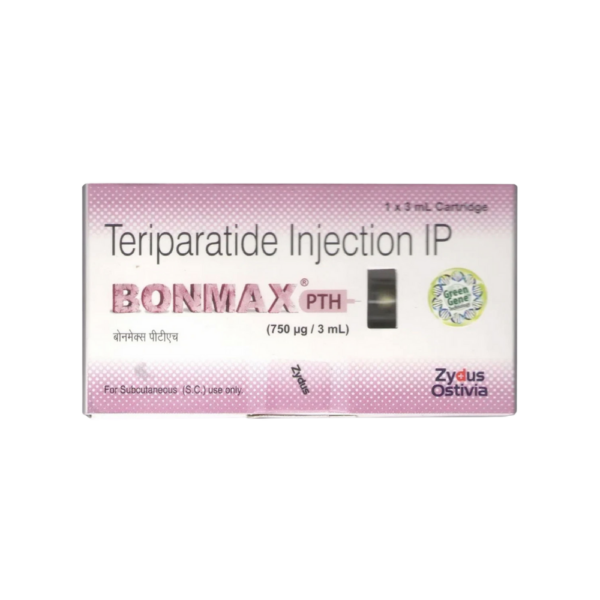


About Teriparatide
Teriparatide: Anabolic Therapy for Severe Osteoporosis
Teriparatide represents a breakthrough in osteoporosis treatment as the first bone-building (anabolic) therapy approved for clinical use. Unlike traditional osteoporosis medications that primarily prevent bone loss, teriparatide actively stimulates new bone formation, offering hope to patients with severe osteoporosis at high risk of fractures.
As a recombinant form of human parathyroid hormone, teriparatide works by mimicking the body’s natural bone-building processes. The parathyroid glands naturally produce parathyroid hormone (PTH), which plays a crucial role in regulating calcium metabolism and bone remodeling. When administered intermittently in therapeutic doses, teriparatide preferentially stimulates osteoblasts—the cells responsible for building new bone—leading to increased bone mineral density and improved bone architecture.
This targeted molecular approach has transformed outcomes for patients with severe osteoporosis who face significant fracture risk despite other treatments. Understanding how teriparatide functions at the cellular and molecular level helps patients and healthcare providers appreciate its unique mechanism and clinical benefits in preventing potentially devastating fractures that can significantly impact quality of life and independence.
Chemical Name: Recombinant human parathyroid hormone (1-34)
Structure: 34-amino acid polypeptide (N-terminal fragment of the 84-amino acid human parathyroid hormone)
Amino Acid Sequence: Ser-Val-Ser-Glu-Ile-Gln-Leu-Met-His-Asn-Leu-Gly-Lys-His-Leu-Asn-Ser-Met-Glu-Arg-Val-Glu-Trp-Leu-Arg-Lys-Lys-Leu-Gln-Asp-Val-His-Asn-Phe
Molecular Formula: C₁₈₁H₂₉₁N₅₅O₅₁S₂
Molecular Weight: 4,117.8 Da (daltons)
PubChem CID: 16132341
Drug Class: Anabolic bone agent; recombinant parathyroid hormone analog
Mechanism of Action:
Teriparatide is a biosynthetic peptide identical to the active N-terminal portion of endogenous human parathyroid hormone (PTH 1-84). While continuous elevation of PTH (as seen in hyperparathyroidism) leads to bone loss, intermittent administration of teriparatide produces the opposite effect—stimulating new bone formation.
The key mechanisms include:
Osteoblast Stimulation:
- Binds to PTH1 receptors on osteoblasts (bone-forming cells)
- Increases osteoblast numbers and activity
- Promotes differentiation of osteoblast precursor cells
- Extends the lifespan of existing osteoblasts by reducing apoptosis
Bone Formation:
- Stimulates both trabecular (spongy interior bone) and cortical (outer dense bone) formation
- Preferentially increases trabecular bone volume
- Improves bone microarchitecture and connectivity
- Increases bone mineral density (BMD) at key fracture sites
Calcium Homeostasis:
- Transiently increases serum calcium levels
- Enhances calcium absorption in the intestines (indirectly)
- Reduces calcium excretion by the kidneys
- Effects are mild and generally well-tolerated
Unique Anabolic Effect: The intermittent dosing pattern is critical—daily subcutaneous injection produces a transient peak in PTH levels that preferentially activates anabolic pathways while avoiding the catabolic (bone-resorbing) effects seen with continuous PTH elevation.
Learn more about bone remodeling: National Institutes of Health – Osteoporosis
Pharmacokinetics:
- Administration: Subcutaneous injection (typically in thigh or abdomen)
- Absorption: Rapid; bioavailability approximately 95%
- Time to Peak: 30 minutes after subcutaneous injection
- Distribution: Limited; does not significantly bind to plasma proteins
- Metabolism: Believed to be metabolized by non-specific enzymatic mechanisms in the liver and kidneys
- Half-life: Approximately 1 hour (subcutaneous administration)
- Excretion: Primarily hepatic and renal clearance
- Duration of Action: Effects on bone formation markers persist for hours after the brief serum presence
Pharmacodynamics:
- Bone Formation Markers: Increase within hours of administration
- Serum procollagen type I N-terminal propeptide (P1NP) – primary marker
- Bone-specific alkaline phosphatase
- Bone Resorption Markers: Initially may slightly increase, then normalize
- BMD Changes: Progressive increases seen over months of treatment
- Lumbar spine: 9-13% increase over 18-24 months
- Hip: 3-6% increase over 18-24 months
- Calcium Effects: Transient increase of 4-6% lasting 4-6 hours after dose
Production: Teriparatide is produced using recombinant DNA technology in Escherichia coli (E. coli). The synthetic process ensures the molecule is identical to the biologically active portion of human PTH, minimizing immunogenicity concerns.
Need Teriparatide?
Our pharmacists can confirm availability, pricing and what your country requires for import.