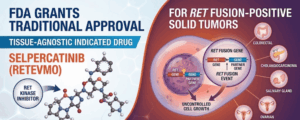
FDA Grants Traditional Approval to Selpercatinib for RET Fusion-Positive Solid Tumors
Medical Review Disclosure This content has been reviewed for medical accuracy. Always consult a qualified healthcare professional before making any
Diagnosis and Detection

Medical Review Disclosure
This content has been reviewed for medical accuracy. Always consult a qualified healthcare professional before making any medical decisions. [Last reviewed: 2025-11-13]
Chemotherapy, often referred to simply as “chemo,” is a type of cancer treatment that uses powerful drugs to stop or slow down the growth of cancer cells, which tend to divide and spread rapidly.
These chemotherapy drugs circulate throughout the body via the bloodstream, making them effective at targeting cancer cells that have spread to other areas of the body (metastasized) beyond the original tumor site.
Based on the type of cancer, chemotherapy can be used alone or in combination with other treatments like immunotherapy, radiation therapy, or surgery.
It’s one of the most well-established and widely used forms of cancer treatment, having played a central role in oncology for over 70 years. From shrinking tumors before surgery to eliminating microscopic cancer cells after surgery, or controlling advanced disease, chemotherapy can be administered at any stage and type of cancer.
This guide breaks down the core elements, whether you have been recently diagnosed with cancer, want to support someone, or are trying to make sense of the situation. It provides an in-depth outline of the chemotherapy process, including how chemotherapy works, its side effects, and other pertinent information.
Chemotherapy is the treatment that utilizes cytotoxic drugs (drugs toxic to cells) to stop the proliferation of the cancerous cells or to destroy them. Unlike radiation therapy or surgery, which work on particular cancerous regions, chemotherapy works on a systematic basis, and it doesn’t matter to the cancer patients where the cancer cells are hiding in their bodies.
Chemotherapy drugs work by interfering with the ability of cancer cells to grow and divide. In contrast to normal cells, cancer cells grow at a much faster rate. Thus, faster multiplying cancer cells are especially vulnerable to these drugs.
Chemotherapy targets both the damage to the cells’ DNA and the process of cell division in the cell cycle. It attempts to stop the uncontrolled growth by targeting various stages of the cycle.
However, chemotherapy doesn’t distinguish perfectly between cancerous and healthy cells. As a result, normal cells that also divide rapidly, such as those in the gastrointestinal tract lining, hair follicles, bone marrow, and reproductive organs, can be affected. This is why side effects such as fatigue, nausea, hair loss, and an increased risk of infection are common during treatment.
The mechanism by which chemotherapy works in the body varies depending on the type of cancer being treated and the type of drugs used. Some drugs circulate through the bloodstream and attack cancer cells throughout the body (systemic therapy), while others are delivered directly into a body cavity or organ for more localized treatment.
The primary goals of chemotherapy include:
The effectiveness of chemotherapy depends on several factors, including the type and stage of cancer, the specific drugs used, and the patient’s overall health. Oncologists carefully tailor each treatment plan to maximize benefit while managing potential risks.
Chemotherapy plays a versatile role in cancer treatment. It can be administered at nearly every stage of the disease, depending on the type of cancer, its location, the extent of its spread (metastases), as well as the patient’s general condition and fitness level.
Here’s how it fits into different phases of the cancer journey:
The most common method, intravenous (IV) chemo, involves inserting a catheter into a vein (sometimes through a chemotherapy port) to deliver the drug directly into the bloodstream.
Some chemotherapy drugs are now available in pill or capsule form, offering a convenient option for certain types of cancer. While easier to take, oral chemotherapy still requires close monitoring due to side effects and potential interactions (Medical News Today, 2024).
For certain types of skin cancer, such as superficial basal cell carcinoma, doctors may prescribe a chemotherapy cream, like 5-fluorouracil (5-FU), which is applied directly to the skin.
This involves delivering chemotherapy directly into the abdominal cavity, which is often used for ovarian or peritoneal cancers. It can provide higher local drug concentrations with fewer systemic side effects.
Chemotherapy can be delivered in several ways, but the chemotherapy process usually follows a carefully planned cycle that allows the body time to recover between treatments. The method and schedule depend on the type of cancer, the specific chemotherapy drugs used, and the patient’s health profile.
Here’s what typically happens during a standard chemotherapy cycle:
Each session may last from a few minutes to several hours, depending on the drug protocol.
A typical cycle may be weekly, bi-weekly, or every three weeks, and the whole course could involve multiple cycles over several months.
A chemo port is a small medical device implanted under the skin to provide easy access to veins. It’s beneficial for patients requiring long-term treatment.
The chemotherapy infusion process itself is typically not painful. Most patients describe it as similar to getting a routine IV or blood draw. A needle or catheter is inserted into a vein, usually in the arm or through a chemotherapy port, to deliver the medication.
However, some individuals may experience a mild burning or stinging sensation at the injection site, especially if the drugs are irritating to the veins. This is known as vein irritation or phlebitis, and nurses closely monitor for it during the infusion process.
The majority of discomfort associated with chemotherapy arises after the treatment, due to side effects caused by the drugs’ impact on healthy, fast-dividing cells. These side effects can vary widely based on:
Severe pain is not a typical feature of chemotherapy itself, but complications such as nerve damage, infections, or reactions to the drugs may cause significant discomfort in some patients.
Some of the most common include:
Yes, many chemotherapy drugs can cause hair loss because they target rapidly dividing cells, including not only cancer cells but also healthy cells, such as those in the hair follicles. Hair follicles are among the fastest-growing cells in the body, which makes them particularly vulnerable to the effects of chemotherapy.
Hair loss typically begins 2 to 4 weeks after starting treatment and may progress gradually or suddenly, depending on the type and dosage of chemotherapy used.
It can occur on the scalp, eyebrows, eyelashes, arms, legs, and other parts of the body. Not all chemotherapy drugs cause hair loss, and the severity of the loss can vary from person to person.
Although the experience of losing hair can be emotionally distressing, it’s essential to remember that in most cases, hair regrows after chemotherapy is completed. Regrowth often begins within a few weeks to months after the last treatment session, and the new hair may initially have a different texture or color.
To help manage or reduce hair loss, some patients use scalp cooling caps during treatment, which may decrease blood flow to the scalp and reduce the amount of chemotherapy that reaches hair follicles. While not effective for everyone, cooling caps have shown promising results in clinical studies.
To help patients cope with the wide range of chemotherapy side effects, doctors often implement supportive measures tailored to the individual’s treatment plan and overall health. These interventions can significantly improve the quality of life during treatment.
Dietitians and physical therapists often play a crucial role in tailoring these lifestyle strategies to meet a patient’s specific needs.
Some side effects of chemotherapy don’t end when treatment does. Depending on the drugs used and the individual’s response, specific effects may last for months or even become permanent:
Mesothelioma, a rare cancer caused by asbestos exposure, often requires a combination of cisplatin and pemetrexed, delivered systemically or intrapleurally.
Breast cancer treatment may involve:
Some cancers respond to:
Avoid:
Family members should wear gloves when handling bodily fluids (such as laundry and vomit) and follow proper hygiene protocols during the first 48 hours after chemotherapy.
Stick to:
Moderate exercise, such as walking or light yoga, may reduce fatigue and preserve nerve function during treatment.
Costs vary widely based on:
Country/region
Most insurance plans cover chemotherapy, but out-of-pocket expenses can be significant.
Chemotherapy remains one of the most essential tools in the fight against cancer. While it presents challenges, understanding the process can help alleviate fear and enable patients to make more informed decisions. If you or a loved one is navigating cancer treatment, speak with your oncologist and care team about all your options and lean on support networks for strength and clarity.
Reference
Medical News Today. (2024). Oral Chemotherapy for Breast Cancer.
Click here
Cancer Center. (2023). Chemotherapy Facts and Myths.
Click here
Medical News Today. (2024). Exercise and Chemotherapy.
Click here
American Cancer Society. (2024). Understanding Chemotherapy.
Click here
Mayo Clinic. (2024). Hair loss from chemotherapy.
Click here
Cleveland Clinic. (2023). Chemotherapy Side Effects.
Click here
Medical Review Disclosure This content has been reviewed for medical accuracy. Always consult a qualified healthcare professional before making any
Medical Review Disclosure This content has been reviewed for medical accuracy. Always consult a qualified healthcare professional before making any
Medical Review Disclosure This content has been reviewed for medical accuracy. Always consult a qualified healthcare professional before making any
Our pharmacists can confirm availability, pricing and what your country requires for import.