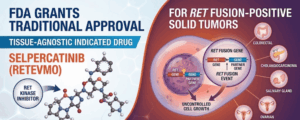
FDA Grants Traditional Approval to Selpercatinib for RET Fusion-Positive Solid Tumors
Medical Review Disclosure This content has been reviewed for medical accuracy. Always consult a qualified healthcare professional before making any
Understanding Cancer

Medical Review Disclosure
This content has been reviewed for medical accuracy. Always consult a qualified healthcare professional before making any medical decisions. [Last reviewed: 2025-11-13]
In the Global, drinking alcohol is often part of social gatherings, celebrations, and even stress relief. But beyond the headache and hangover lies a more serious risk: alcohol is a known carcinogen; it can cause cancer.
Whether you drink occasionally or regularly, research shows that even small amounts of alcohol can increase your risk of developing several types of cancer.
This article explains how alcohol affects your body, what cancers are linked to alcohol, and how Globals can reduce their cancer risk without giving up their social life entirely.
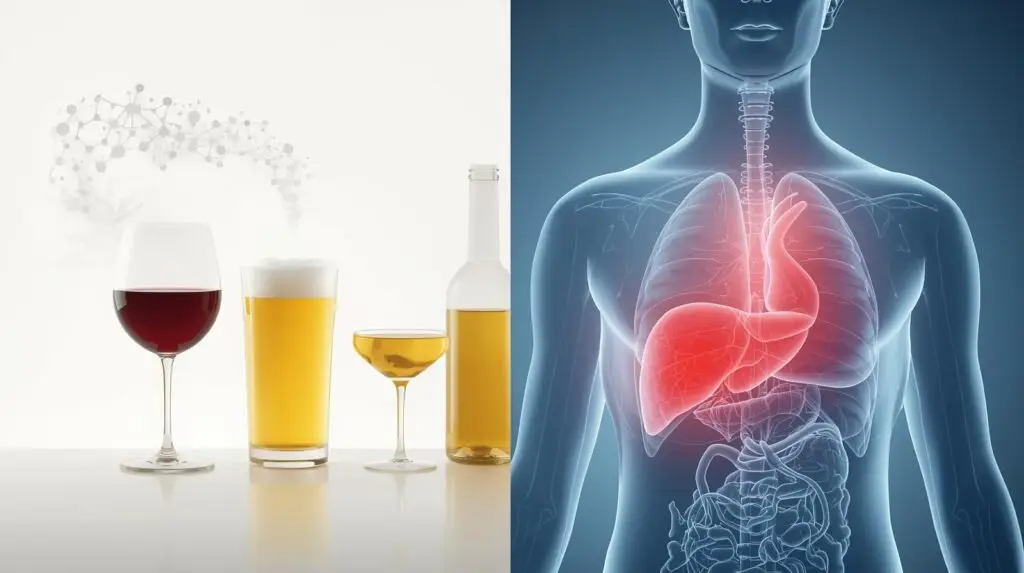
Every time you consume beer, wine, or spirits, your body goes to work breaking down the ethanol, the active ingredient in alcohol.
This process primarily occurs in the liver, where enzymes convert ethanol into acetaldehyde, a highly toxic and carcinogenic compound.
Even small amounts of alcohol can trigger this toxic process. That’s why alcohol causes cancer not only at high doses but even with moderate consumption, according to the National Cancer Institute and Cancer Research UK12.
Additionally, alcohol:
Extensive research has shown that alcohol consumption increases the risk of at least seven significant types of cancer. These are not based on myths; they are documented by global health authorities, such as the International Agency for Research on Cancer (IARC) and the World Health Organization (WHO).
| Cancer Type | How Alcohol Increases Risk |
| Mouth, Throat, Esophagus | Damages the cell lining, enhances tobacco carcinogen entry |
| Liver Cancer | Causes cirrhosis and liver inflammation |
| Breast Cancer | Increases estrogen levels |
| Colon and Rectal Cancer | Disrupts digestion, affects folate levels |
| Stomach & Pancreatic Cancer | Triggers chronic inflammation |
Many Globals believe that moderate drinking is harmless. But multiple studies show that there’s no completely safe level of alcohol when it comes to cancer risk.
Risk increases with every additional drink, even at “moderate” levels.
| Drink Type | Standard Serving in PH | Cancer Risk Level |
| Beer (330 ml) | 1 bottle | Mild to moderate |
| Wine (150 ml) | 1 glass | Moderate |
| Spirits (40 ml shot) | 1 shot | Moderate to high |
Some Globals have a genetic trait called ALDH2 deficiency, which causes alcohol flushing (red face after drinking).
This trait makes it harder to break down acetaldehyde, leading to higher levels of toxins in the body and a much greater risk of esophageal and head & neck cancers.
If you smoke and drink, your cancer risk doesn’t just add up, it multiplies.
According to Cancer Research UK, smokers who also drink alcohol are several times more likely to develop mouth, throat, or esophageal cancer than those who do neither.
This is especially relevant in the Global, where both drinking and smoking are common among men.
| Myth | Fact |
| Red wine is good for the heart, so it must be safe. | Red wine still contains ethanol, the cancer-causing ingredient. |
| Beer is less harmful than hard liquor. | All alcohol types increase cancer risk—it’s the ethanol, not the drink. |
| I only drink on weekends. | Binge drinking causes high toxic exposure, even if done infrequently. |
Even if you’ve been drinking for many years, quitting or reducing alcohol consumption can significantly lower your cancer risk, and your body begins to heal faster than you might think.
According to the National Cancer Institute and multiple global studies, people who stop drinking alcohol gradually reduce their risk of developing alcohol-related cancers, especially in the mouth, throat, liver, breast, and colon1.
Quitting alcohol gives your body a chance to repair cellular damage, restore immune function, and reduce chronic inflammation, all of which are key drivers of cancer.
Here’s how your body responds after cutting back:
Philippine health policy lacks strong warning labels on alcohol products. Unlike tobacco, alcohol marketing remains widely visible and under-regulated.
Alcohol is officially classified as a Group 1 carcinogen—the same category as tobacco and asbestos. While it’s socially accepted and often glamorized, its link to cancer is scientifically proven and serious.
Always consult your doctor or healthcare provider if you’re concerned about your cancer risk or alcohol use. Early awareness saves lives.
Medical Review Disclosure This content has been reviewed for medical accuracy. Always consult a qualified healthcare professional before making any
Medical Review Disclosure This content has been reviewed for medical accuracy. Always consult a qualified healthcare professional before making any
Medical Review Disclosure This content has been reviewed for medical accuracy. Always consult a qualified healthcare professional before making any
Our pharmacists can confirm availability, pricing and what your country requires for import.