
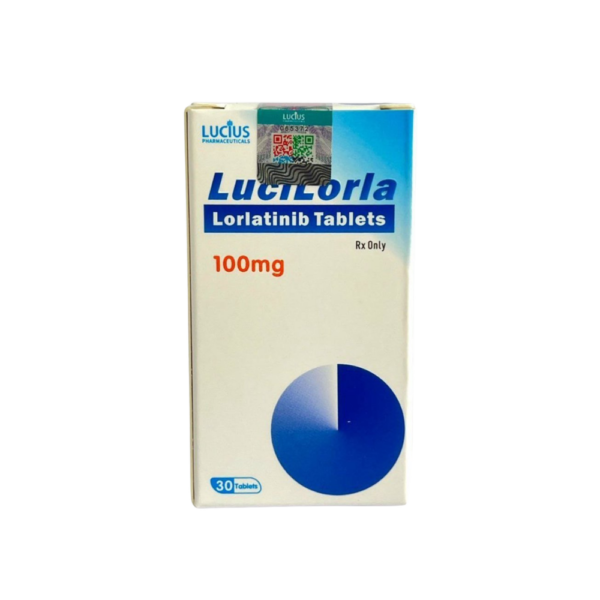
Lorlatinib is an active pharmaceutical ingredient (API) that targets ALK (anaplastic lymphoma kinase) and ROS1 rearrangements. It’s commonly prescribed for patients whose cancer has progressed on first- or second-generation ALK inhibitors.
-
Drug class: Antineoplastic agent (ALK/ROS1 inhibitor)
-
Dosage form: Oral tablet
-
Prescription status: Prescription-only anticancer medicine
How Lorlatinib Works (Mechanism of Action)
Lorlatinib blocks abnormal ALK and ROS1 signaling pathways that drive cancer cell growth. It was engineered to:
-
Inhibit multiple ALK resistance mutations
-
Penetrate the blood–brain barrier, making it effective against brain metastases
-
Suppress cancer cell proliferation and survival
Approved Uses of Lorlatinib
Lorlatinib is primarily used for:
-
ALK-positive metastatic NSCLC
-
Patients who have progressed after other ALK inhibitors (e.g., crizotinib, alectinib, ceritinib)
Treatment decisions should always be guided by molecular testing and an oncologist’s recommendation.
Key Benefits
-
Effective against resistant ALK mutations
-
Strong central nervous system (CNS) activity
-
Oral administration for convenience
-
Useful in later-line therapy settings
Common Side Effects
Like many targeted cancer therapies, Lorlatinib may cause side effects. Commonly reported ones include:
-
High cholesterol or triglyceride levels
-
Weight gain and edema
-
Fatigue
-
Peripheral neuropathy
-
Mood or cognitive changes
Serious side effects are less common but require close medical monitoring.
Safety & Precautions
-
Regular lipid monitoring is recommended
-
Patients should report neurological or mood changes promptly
-
Drug interactions are possible—always review current medications with your doctor
-
Not recommended during pregnancy unless clearly necessary
Showing all 4 results

Last updated on 18-05-2026 16:25:27
Overview
- FaqWritten by:

Lorlatinib is an active pharmaceutical ingredient (API) that targets ALK (anaplastic lymphoma kinase) and ROS1 rearrangements. It’s commonly prescribed for patients whose cancer has progressed on first- or second-generation ALK inhibitors.
-
Drug class: Antineoplastic agent (ALK/ROS1 inhibitor)
-
Dosage form: Oral tablet
-
Prescription status: Prescription-only anticancer medicine
How Lorlatinib Works (Mechanism of Action)
Lorlatinib blocks abnormal ALK and ROS1 signaling pathways that drive cancer cell growth. It was engineered to:
-
Inhibit multiple ALK resistance mutations
-
Penetrate the blood–brain barrier, making it effective against brain metastases
-
Suppress cancer cell proliferation and survival
Approved Uses of Lorlatinib
Lorlatinib is primarily used for:
-
ALK-positive metastatic NSCLC
-
Patients who have progressed after other ALK inhibitors (e.g., crizotinib, alectinib, ceritinib)
Treatment decisions should always be guided by molecular testing and an oncologist’s recommendation.
Key Benefits
-
Effective against resistant ALK mutations
-
Strong central nervous system (CNS) activity
-
Oral administration for convenience
-
Useful in later-line therapy settings
Common Side Effects
Like many targeted cancer therapies, Lorlatinib may cause side effects. Commonly reported ones include:
-
High cholesterol or triglyceride levels
-
Weight gain and edema
-
Fatigue
-
Peripheral neuropathy
-
Mood or cognitive changes
Serious side effects are less common but require close medical monitoring.
Safety & Precautions
-
Regular lipid monitoring is recommended
-
Patients should report neurological or mood changes promptly
-
Drug interactions are possible—always review current medications with your doctor
-
Not recommended during pregnancy unless clearly necessary