
Everolimus is a targeted small-molecule therapy used across oncology, transplantation medicine, and select rare diseases. Its therapeutic value lies in its ability to regulate abnormal cell growth, proliferation, and metabolism by acting on a central intracellular control pathway that governs how cells respond to growth signals and environmental stress.
At the molecular level, Everolimus works by inhibiting mammalian target of rapamycin (mTOR), a key regulatory kinase involved in cell growth, protein synthesis, angiogenesis, and energy metabolism. In many cancers and proliferative disorders, the mTOR pathway becomes overactive, allowing cells to grow and divide unchecked. Everolimus binds to an intracellular protein complex that ultimately suppresses mTOR signaling, restoring control over these dysregulated processes.
Unlike traditional chemotherapy, Everolimus does not directly damage DNA or rapidly dividing cells. Instead, it modulates cellular behavior, slowing proliferation, reducing blood vessel formation within tumors, and limiting nutrient-driven growth signals. This mechanism allows for sustained disease control in conditions where long-term pathway suppression is more effective than acute cytotoxicity.
Everolimus is used in a wide range of clinical settings, including hormone receptor–positive breast cancer, renal cell carcinoma, neuroendocrine tumors, and certain non-oncologic indications such as organ transplantation and rare genetic disorders. Its versatility reflects the central role of mTOR signaling in both malignant and non-malignant disease biology.
From a pharmaceutical perspective, Everolimus requires precise molecular consistency and stable systemic exposure. Because mTOR signaling is involved in many normal physiological processes, predictable inhibition is essential to maintain therapeutic benefit while minimizing unintended effects. Long-term administration further increases the importance of formulation reliability, controlled bioavailability, and consistent manufacturing standards.
Clinically, the effects of Everolimus are often gradual rather than immediate. Treatment response may present as disease stabilization, delayed progression, or improved control when combined with other therapies. This reinforces the need for ongoing monitoring and adherence, as the drug’s benefit is closely tied to sustained pathway modulation over time.
Overall, Everolimus represents a mature example of targeted therapy where deep understanding of intracellular signaling translates into broad clinical applicability. Its role across multiple therapeutic areas highlights how carefully designed molecules can influence fundamental biological pathways and deliver meaningful, long-term clinical benefit.
Showing all 4 results
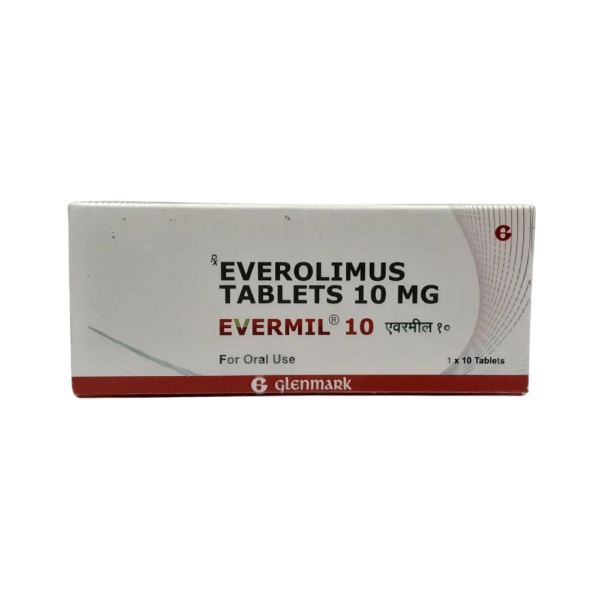


Last updated on 18-05-2026 16:02:11
Overview
- FaqWritten by:

Everolimus is a targeted small-molecule therapy used across oncology, transplantation medicine, and select rare diseases. Its therapeutic value lies in its ability to regulate abnormal cell growth, proliferation, and metabolism by acting on a central intracellular control pathway that governs how cells respond to growth signals and environmental stress.
At the molecular level, Everolimus works by inhibiting mammalian target of rapamycin (mTOR), a key regulatory kinase involved in cell growth, protein synthesis, angiogenesis, and energy metabolism. In many cancers and proliferative disorders, the mTOR pathway becomes overactive, allowing cells to grow and divide unchecked. Everolimus binds to an intracellular protein complex that ultimately suppresses mTOR signaling, restoring control over these dysregulated processes.
Unlike traditional chemotherapy, Everolimus does not directly damage DNA or rapidly dividing cells. Instead, it modulates cellular behavior, slowing proliferation, reducing blood vessel formation within tumors, and limiting nutrient-driven growth signals. This mechanism allows for sustained disease control in conditions where long-term pathway suppression is more effective than acute cytotoxicity.
Everolimus is used in a wide range of clinical settings, including hormone receptor–positive breast cancer, renal cell carcinoma, neuroendocrine tumors, and certain non-oncologic indications such as organ transplantation and rare genetic disorders. Its versatility reflects the central role of mTOR signaling in both malignant and non-malignant disease biology.
From a pharmaceutical perspective, Everolimus requires precise molecular consistency and stable systemic exposure. Because mTOR signaling is involved in many normal physiological processes, predictable inhibition is essential to maintain therapeutic benefit while minimizing unintended effects. Long-term administration further increases the importance of formulation reliability, controlled bioavailability, and consistent manufacturing standards.
Clinically, the effects of Everolimus are often gradual rather than immediate. Treatment response may present as disease stabilization, delayed progression, or improved control when combined with other therapies. This reinforces the need for ongoing monitoring and adherence, as the drug’s benefit is closely tied to sustained pathway modulation over time.
Overall, Everolimus represents a mature example of targeted therapy where deep understanding of intracellular signaling translates into broad clinical applicability. Its role across multiple therapeutic areas highlights how carefully designed molecules can influence fundamental biological pathways and deliver meaningful, long-term clinical benefit.