
Molecule
Etoposide
Etoposide is used in prescription treatment plans. Learn dosage guidance, side effects, precautions, and available strengths at Medsmonk.
Available Etoposide brands
Bioposide 100 mg Injection
Zydus
Ask for price
Posid 100 mg Injection
Cadila Pharmaceuticals Ltd
Ask for price
Posid 50 mg Capsule
Cadila Pharmaceuticals Ltd
Ask for price
Etoplast 50 mg Capsule
Ask for price
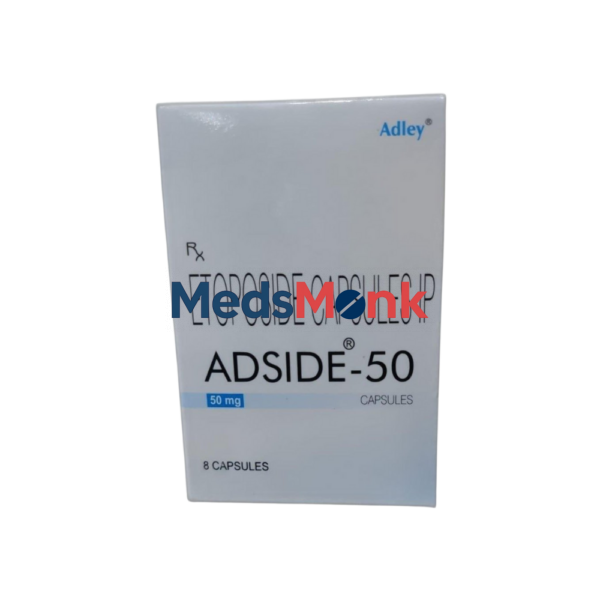
Adside 50 mg Capsule
Adley
Ask for price
Vepesid Injection
Bristol Myers Squibb
Ask for price
Etopodas Injection
Salvavidas Pharma
Ask for price
About Etoposide
Etoposide is a chemotherapeutic agent and semisynthetic derivative of podophyllotoxin. It belongs to the topoisomerase II inhibitor class, binding the topoisomerase II complex to induce double‑stranded DNA breaks, leading to cell death in fast-dividing cancer cells, especially during the S and G2 phases of the cell cycle.
Approved Uses
Small cell lung cancer (SCLC) — first-line treatment in combination regimens.
Testicular cancer — post-surgical/chemotherapy refractory disease.
Other malignancies: lymphoma, leukemia, ovarian, bladder, gastric, testicular, neuroblastoma, glioblastoma, Kaposi’s sarcoma.
Administration & Dosage
Intravenous (IV) infusion over 30–60 minutes (must be slow to avoid hypotension)
Typical dose: 35–50 mg/m² daily × 4–5 days every 3–4 weeks for SCLC.
Oral capsules: variable bioavailability (25–75%), about twice the IV dose.
Monitoring: routine blood counts, renal/hepatic function before and during therapy.
Side Effects & Precautions
Hematologic Toxicity
Common bone marrow suppression: low WBC, RBC, platelets, risk of infection, anemia, bleeding.
Other Common Effects
Nausea, vomiting, mouth sores, diarrhea or constipation, hair loss.
Hypotension during infusion, infusion-site irritation, and a metallic taste.
Serious Risks
Secondary malignancy: risk of therapy-related leukemia.
Hypersensitivity reactions, severe skin reactions, seizures, liver toxicity
Special Precautions
Avoid use during pregnancy and breastfeeding (Pregnancy Category D)
Use caution with liver or kidney impairment and concurrent myelosuppressive or CYP3A4-modulating drugs .
Avoid live vaccines during treatment.
Pharmacokinetics
Bioavailability: 25–75% orally, 97% protein bound.
Half-life: ~6 hours (oral) to 6–12 hours (IV).
Metabolism and excretion: hepatic CYP3A4-mediated, renal, and fecal elimination.
Etoposide is a versatile topoisomerase II inhibitor utilized for various cancers. Its efficacy depends on precise dosing and vigilant monitoring, particularly for bone marrow suppression and infusion-related reactions.
Need Etoposide?
Our pharmacists can confirm availability, pricing and what your country requires for import.