
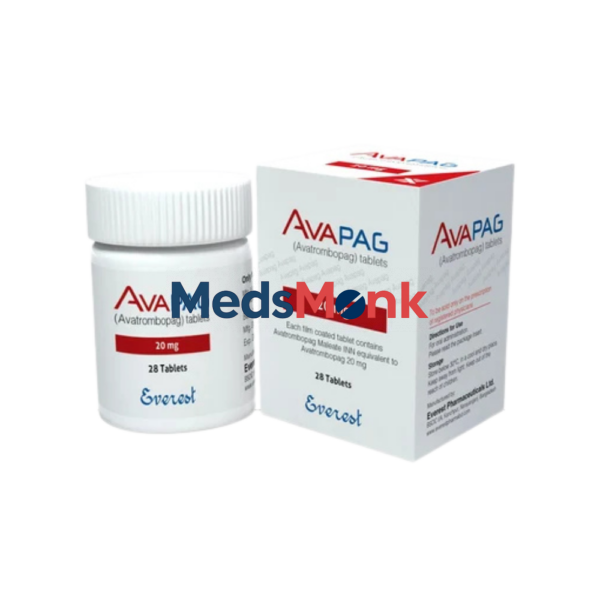
Avatrombopag is an oral small-molecule therapy used to manage thrombocytopenia (low platelet count) in specific clinical settings. It plays an important role in hematology by stimulating platelet production without the need for platelet transfusions, helping reduce bleeding risk and treatment delays.
At the molecular level, Avatrombopag functions as a thrombopoietin (TPO) receptor agonist. It selectively activates the thrombopoietin receptor on megakaryocyte precursors in the bone marrow, promoting platelet production. Unlike some earlier agents in this class, Avatrombopag does not compete with endogenous thrombopoietin, allowing for a predictable and controlled increase in platelet counts.
Because Avatrombopag is used in patients with complex underlying conditions such as chronic liver disease or immune-mediated thrombocytopenia, molecular purity, stability, and dosing consistency are critical. These properties ensure reliable platelet response and support safe clinical use across different patient populations.
Prescribing Information
Prescribing information provides official guidance on approved indications, dosage schedules, administration instructions, contraindications, and safety considerations.
Clinical Trial Details
Avatrombopag has been evaluated in multiple clinical studies supporting its effectiveness in raising platelet counts and reducing the need for platelet transfusions.
Key studies include ADAPT-1 and ADAPT-2 trials in patients with chronic liver disease undergoing procedures, as well as trials in chronic immune thrombocytopenia (ITP) demonstrating sustained platelet responses.
FDA Approval Status
Avatrombopag is approved by the U.S. Food and Drug Administration for:
-
The treatment of thrombocytopenia in adults with chronic liver disease scheduled to undergo a medical procedure
-
The treatment of chronic immune thrombocytopenia in adults with an insufficient response to previous therapy
It is marketed under the brand name Doptelet® by Sobi (Swedish Orphan Biovitrum).
Showing all 3 results
Last updated on 18-05-2026 16:25:27
Overview
- FaqWritten by:

Avatrombopag is an oral small-molecule therapy used to manage thrombocytopenia (low platelet count) in specific clinical settings. It plays an important role in hematology by stimulating platelet production without the need for platelet transfusions, helping reduce bleeding risk and treatment delays.
At the molecular level, Avatrombopag functions as a thrombopoietin (TPO) receptor agonist. It selectively activates the thrombopoietin receptor on megakaryocyte precursors in the bone marrow, promoting platelet production. Unlike some earlier agents in this class, Avatrombopag does not compete with endogenous thrombopoietin, allowing for a predictable and controlled increase in platelet counts.
Because Avatrombopag is used in patients with complex underlying conditions such as chronic liver disease or immune-mediated thrombocytopenia, molecular purity, stability, and dosing consistency are critical. These properties ensure reliable platelet response and support safe clinical use across different patient populations.
Prescribing Information
Prescribing information provides official guidance on approved indications, dosage schedules, administration instructions, contraindications, and safety considerations.
Clinical Trial Details
Avatrombopag has been evaluated in multiple clinical studies supporting its effectiveness in raising platelet counts and reducing the need for platelet transfusions.
Key studies include ADAPT-1 and ADAPT-2 trials in patients with chronic liver disease undergoing procedures, as well as trials in chronic immune thrombocytopenia (ITP) demonstrating sustained platelet responses.
FDA Approval Status
Avatrombopag is approved by the U.S. Food and Drug Administration for:
-
The treatment of thrombocytopenia in adults with chronic liver disease scheduled to undergo a medical procedure
-
The treatment of chronic immune thrombocytopenia in adults with an insufficient response to previous therapy
It is marketed under the brand name Doptelet® by Sobi (Swedish Orphan Biovitrum).