
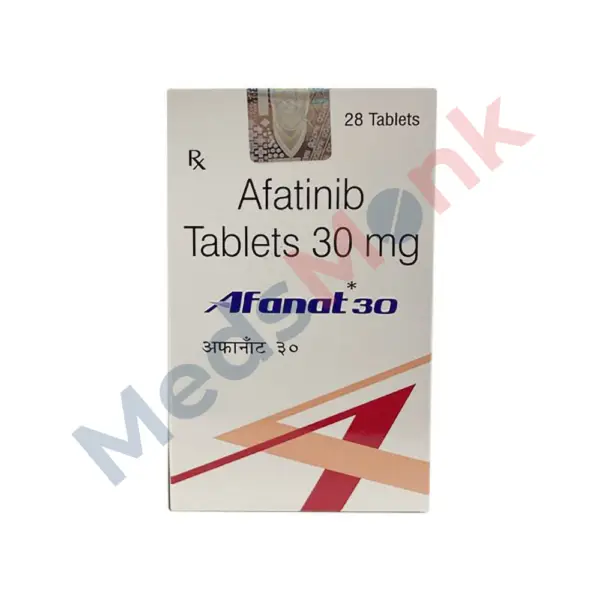
Afatinib is a targeted small-molecule therapy used in the treatment of specific types of lung cancer. It is designed to block abnormal signaling pathways that drive cancer cell growth, particularly in tumors with epidermal growth factor receptor (EGFR) mutations.
At the molecular level, Afatinib acts as an irreversible inhibitor of the ErbB family of tyrosine kinases, including EGFR and ErbB2 (HER2). By permanently binding to these receptors, the molecule prevents cancer cells from receiving signals that promote uncontrolled proliferation. This irreversible binding distinguishes Afatinib from earlier EGFR inhibitors and contributes to its sustained therapeutic activity.
Because Afatinib is used in precision oncology, strict control of molecular purity, stability, and formulation is essential. These characteristics directly influence bioavailability, treatment consistency, and patient safety. Afatinib has become an important molecule in targeted cancer therapy, particularly for patients with defined genetic mutations.
Prescribing Information
Prescribing information provides official guidance on approved indications, dosing schedules, administration instructions, contraindications, and safety warnings.
Clinical Trial Details
Afatinib has been evaluated in multiple clinical trials that established its efficacy in EGFR-mutated non-small cell lung cancer (NSCLC). Key studies include LUX-Lung 3, LUX-Lung 6, and LUX-Head & Neck 1, which demonstrated improved progression-free survival compared to standard chemotherapy in selected patient populations.
Showing all 4 results
Last updated on 14-07-2026 22:35:54
Overview
- FaqWritten by:

Afatinib is a targeted small-molecule therapy used in the treatment of specific types of lung cancer. It is designed to block abnormal signaling pathways that drive cancer cell growth, particularly in tumors with epidermal growth factor receptor (EGFR) mutations.
At the molecular level, Afatinib acts as an irreversible inhibitor of the ErbB family of tyrosine kinases, including EGFR and ErbB2 (HER2). By permanently binding to these receptors, the molecule prevents cancer cells from receiving signals that promote uncontrolled proliferation. This irreversible binding distinguishes Afatinib from earlier EGFR inhibitors and contributes to its sustained therapeutic activity.
Because Afatinib is used in precision oncology, strict control of molecular purity, stability, and formulation is essential. These characteristics directly influence bioavailability, treatment consistency, and patient safety. Afatinib has become an important molecule in targeted cancer therapy, particularly for patients with defined genetic mutations.
Prescribing Information
Prescribing information provides official guidance on approved indications, dosing schedules, administration instructions, contraindications, and safety warnings.
Clinical Trial Details
Afatinib has been evaluated in multiple clinical trials that established its efficacy in EGFR-mutated non-small cell lung cancer (NSCLC). Key studies include LUX-Lung 3, LUX-Lung 6, and LUX-Head & Neck 1, which demonstrated improved progression-free survival compared to standard chemotherapy in selected patient populations.