
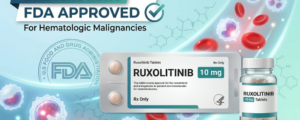
Ruxolitinib Tablets Receive FDA Approval for Hematologic Malignancies
Medical Review DisclosureThis content has been reviewed for medical accuracy. Always consult a qualified healthcare professional before making any medical
Cancer Medicine


Medical Review Disclosure
This content has been reviewed for medical accuracy. Always consult a qualified healthcare professional before making any medical decisions. [Last reviewed: 2026-05-16]
n
Brain tumors, especially high-grade gliomas, are among the most aggressive and difficult-to-treat cancers. In a significant development, the U.S. Food and Drug Administration (FDA) has granted Breakthrough Therapy Designation (BTD) to plixorafenib for the treatment of BRAF V600E–mutated high-grade glioma.
This fast-track status highlights the potential of plixorafenib as a targeted therapy and brings new hope to patients with limited treatment options.
High-grade gliomas are fast-growing brain tumors that originate in the glial cells of the brain. These tumors are classified as Grade III or Grade IV, with glioblastoma (GBM) being the most aggressive form.
Symptoms may include headaches, seizures, memory problems, and neurological deficits.
The BRAF gene plays a role in regulating cell growth through the MAPK signaling pathway. A specific mutation known as BRAF V600E leads to uncontrolled cell division and tumor growth.
BRAF V600E mutations are also seen in other cancers, such as melanoma and colorectal cancer, making it a well-studied therapeutic target.
Plixorafenib is an investigational targeted therapy designed to inhibit the activity of mutated BRAF proteins, particularly the V600E mutation.
Unlike traditional chemotherapy, plixorafenib acts at the molecular level, making it more precise and potentially more effective for patients with mutation-positive tumors.
The FDA grants Breakthrough Therapy Designation to drugs that show substantial improvement over existing treatments for serious or life-threatening conditions.
This designation indicates that plixorafenib has demonstrated promising clinical results in early trials.
The FDA’s decision to grant BTD is based on early clinical data showing encouraging outcomes in patients with BRAF V600E–mutated high-grade glioma.
These results are particularly important because treatment options for high-grade glioma are currently limited.
Standard treatments for high-grade glioma include:
However, these approaches often provide limited long-term control, especially in aggressive cases.
The introduction of targeted therapies like plixorafenib marks a shift toward precision oncology, where treatments are tailored to specific genetic mutations.
While plixorafenib is still under investigation, targeted therapies may cause side effects such as:
Patients receiving such therapies require regular monitoring to manage potential adverse effects.
The FDA’s decision to fast-track plixorafenib reflects a growing focus on mutation-driven cancer treatment.
For patients with BRAF V600E–mutated glioma, this could represent a major advancement in therapy.
While plixorafenib is not yet fully approved, ongoing clinical trials will determine its long-term effectiveness and safety.
As research continues, targeted therapies are expected to play an increasingly important role in cancer treatment.
The FDA’s Breakthrough Therapy Designation for plixorafenib marks a promising step forward in the treatment of BRAF V600E–mutated high-grade glioma. By targeting the genetic drivers of cancer, this therapy represents the future of oncology—more precise, personalized, and potentially more effective.
Patients and healthcare providers should stay informed as this therapy progresses through clinical development.
Medical Review DisclosureThis content has been reviewed for medical accuracy. Always consult a qualified healthcare professional before making any medical
Medical Review DisclosureThis content has been reviewed for medical accuracy. Always consult a qualified healthcare professional before making any medical
Medical Review DisclosureThis content has been reviewed for medical accuracy. Always consult a qualified healthcare professional before making any medical
Our pharmacists can confirm availability, pricing and what your country requires for import.