










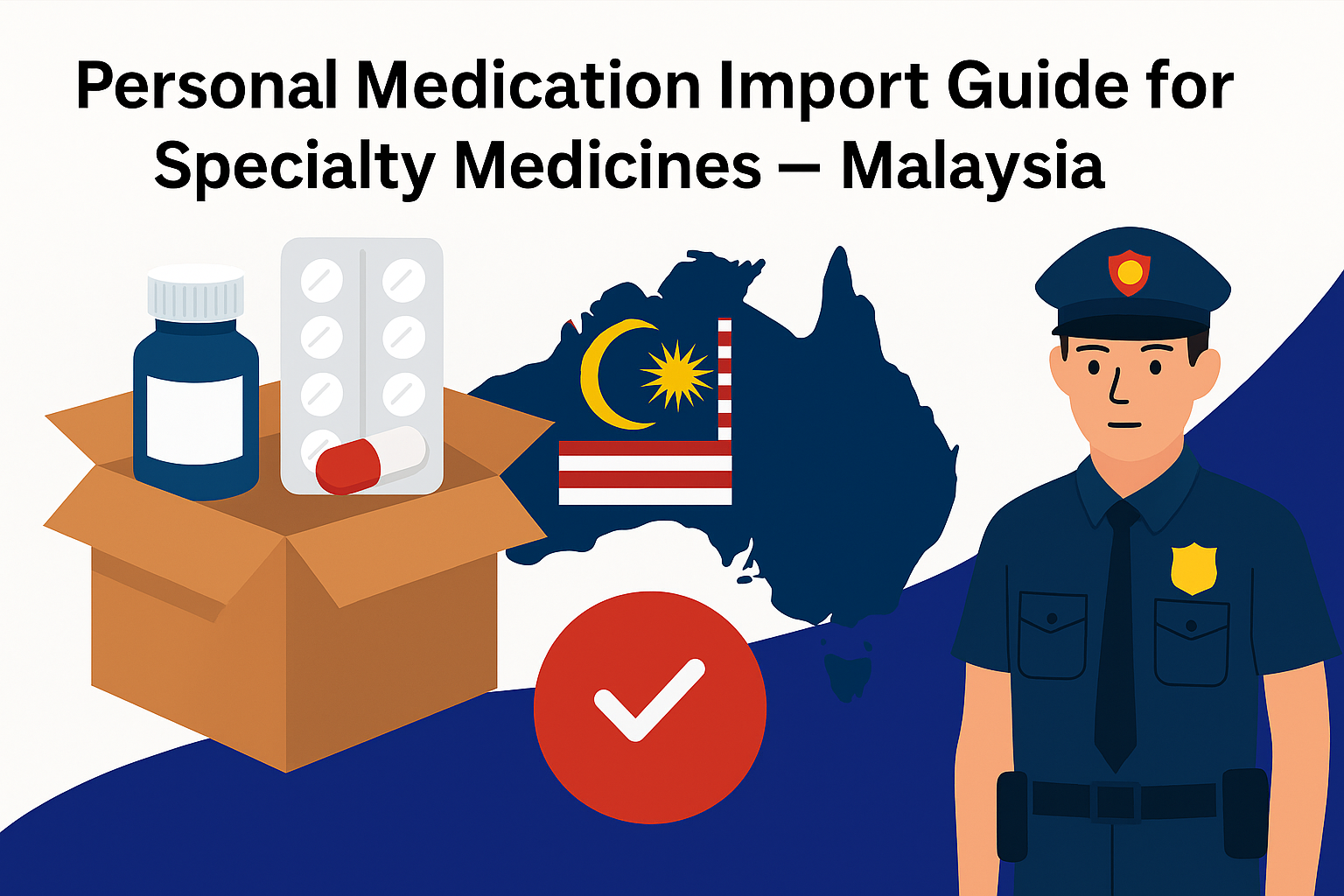
Malaysia allows individuals to import prescription and specialty medicines for personal medical treatment, but the process is regulated by the Malaysian Ministry of Health (MOH) and Customs. Specialty medicines—such as cancer drugs, biologics, immunotherapy, and rare-disease treatments—may undergo stricter checks to ensure they are used solely by the patient.
This guide explains the requirements, documents, and customs steps involved when importing specialty medicines for personal use into Malaysia.
Can You Import Specialty Medicines for Personal Use?
Yes. Malaysia permits personal import of specialty medicines under the following conditions:
- The medicines must be strictly for personal medical treatment.
- Quantity must be reasonable (typically a 1–3 month supply depending on treatment).
- Importation must not be for resale, distribution, or commercial activity.
- Some controlled substances require special approval from the MOH Pharmacy Enforcement Division.
Specialty Medicines That May Require Extra Screening
The following types of medicines receive additional customs scrutiny:
- Oncology and chemotherapy medicines
- Immunotherapy and targeted therapies
- Biologics and biosimilars
- Rare-disease medications (orphan drugs)
- Injectable or temperature-sensitive medicines
- Medicines containing controlled ingredients
If the medicine falls under controlled substance categories, customs may request special permits before release.
Required Documents for Personal Import
Prepare these documents to avoid delays:
Doctor’s Prescription
Must include:
- Patient name
- Drug name, strength, and dosage
- Treatment duration
- Doctor’s information
Medical Letter / Treatment Summary
A short note explaining:
- The medical condition
- Why the specialty medication is required
- Expected treatment period
Identification Document
Passport or Malaysian IC (for residents).
Invoice / Proof of Purchase
Should clearly show the medicine name, formulation, and quantity.
Cold-Chain Handling Note (if applicable)
For biologics or temperature-sensitive items.
Customs & MOH Regulations
When your shipment arrives in Malaysia, customs may:
- Inspect the package
- Verify prescription and medical documents
- Request clarification by email or phone
- Forward the case to MOH Pharmacy Enforcement for review
- Apply VAT or import duty depending on product type
Shipments without documents may be held, returned, or confiscated.
Import Duties & Taxes
Depending on the medicine category:
- VAT and import duties may apply
- Certain essential medicines may pass with reduced duties
- High-value specialty medicines may require payment before release
Courier services generally assist in notifying you of any duty amount.
Quantity Limits for Personal Use
Malaysia generally accepts:
- 1–3 month supply of prescription or specialty medicines
- Larger quantities require stronger medical justification
Excessive quantities may be treated as commercial import.
Packaging Recommendations
To ensure smooth clearance:
- Keep medicines in original sealed packaging
- Add a copy of the prescription inside the parcel
- Label cold-chain boxes clearly
- Ensure patient name matches all documents
Controlled & Restricted Medicines
Some medications require special permits from the Malaysian MOH, especially if they fall under:
- Psychotropics
- Narcotic components
- Strongly regulated active ingredients
If your medicine appears in these categories, customs may require you to obtain MOH authorization before clearing the parcel.
Possible Customs Outcomes
After document review, customs may:
- Release the shipment
- Hold it pending verification
- Require additional permits
- Return it to the sender
- Seize it if regulations are violated
Proper documentation greatly reduces the chance of rejection.
Important Notes
- These guidelines apply only to personal-use imports, not commercial shipments.
- Regulations can change; always verify updated rules from Malaysian Customs & MOH.
- Specialty medicines usually require more detailed documentation compared to regular prescriptions.