










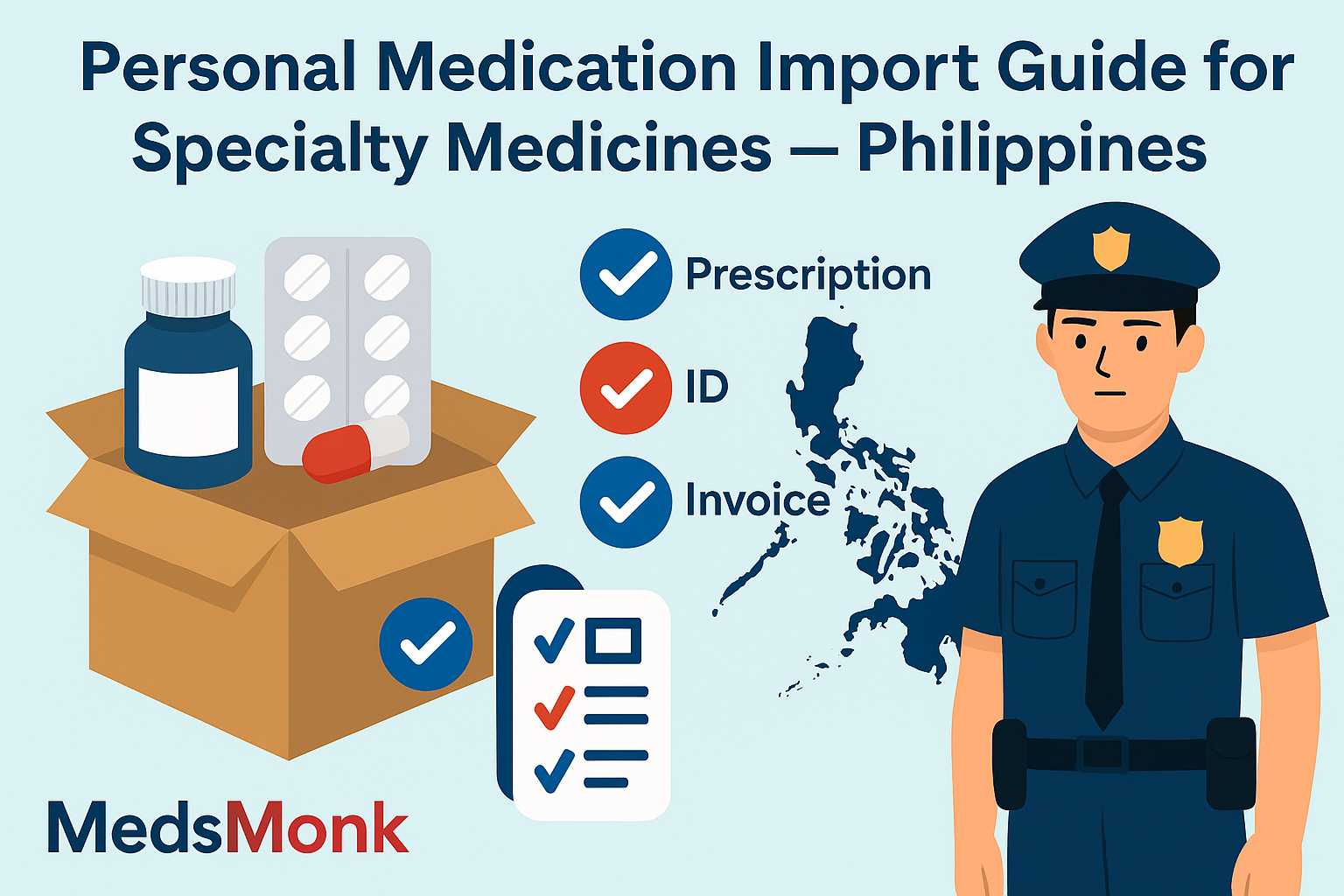
The Philippines allows individuals to import prescription and specialty medicines for personal use, but the process is regulated by the Food and Drug Administration (FDA Philippines) and Bureau of Customs (BOC). Specialty medicines — including oncology drugs, biologics, immunotherapy, and rare-disease medications — require proper documentation to ensure clearance.
This guide provides a complete overview for patients who need to import specialty medications for their own treatment.
Is Personal Import Allowed in the Philippines?
Yes — personal import of prescription and specialty medicines is allowed under the Personal Use Importation Rule, as long as:
- The medicines are strictly for personal treatment
- Quantity matches medical requirements
- Proper documentation is provided
- No resale or distribution is involved
Some medicines require additional FDA permits, especially those classified as regulated, controlled, or dangerous drugs.
Specialty Medicines Requiring Extra Review
The Philippines applies stricter screening to the following:
- Cancer (oncology) medicines
- Biologics & biosimilars
- Immunotherapy & targeted therapies
- Hormonal & endocrine therapies
- Rare-disease/orphan medications
- Injectables & IV medications
- Medicines containing regulated or controlled substances
Controlled substances require a Special Permit through FDA/PNP/Dangerous Drugs Board.
Required Documents
To avoid delays at customs, prepare:
Doctor’s Prescription
Must include:
- Patient name
- Medication name, strength, dosage
- Duration of therapy
- Doctor’s details & license number
Medical Summary / Treatment Letter
Explaining:
- Diagnosis
- Necessity of the medicine
- Ongoing treatment plan
Invoice / Proof of Purchase
Should list:
- Medicine name
- Strength
- Quantity
- Total value
Patient Identification
Passport, driver’s license, or Philippine national ID.
Cold-Chain Handling Instructions (if applicable)
Bureau of Customs & FDA Rules
When the shipment arrives:
- Customs may request your documentation
- FDA may review the medicine category
- Regulated drugs require an Import Permit
- Controlled substances require DDB approval
- Packages without proper documents may be seized or returned
FDA Philippines may request clarifications for biologics or injectables.
Duties & Taxes
The Philippines may charge:
- Import duty
- Value-Added Tax (12% VAT)
- Customs processing fees
Duty depends on classification and declared value.
Quantity Limits for Personal Use
Typical allowance:
- Up to 3 months’ supply of prescription/specialty medicines
Larger quantities may be investigated or refused.
Controlled & Regulated Medicines
Medicines containing:
- Narcotics
- Opioids
- Benzodiazepines
- Psychotropic substances
- ADHD medications
- Strong pain relievers
Require special FDA + Dangerous Drugs Board (DDB) permits.
Unauthorized imports of controlled substances can lead to seizure or legal investigation.
Possible Customs Outcomes
Customs may:
- Release shipment
- Ask for additional documents
- Forward the case to FDA
- Charge duties/taxes
- Return or confiscate the parcel
Proper documentation ensures smoother clearance.
Official Verification Links
- FDA Philippines – Public Health Advisory & Drug Import Guidelines
https://www.fda.gov.ph - Bureau of Customs – Import Guidelines
https://customs.gov.ph - DDB – Dangerous Drugs Board (Controlled Substances)
https://ddb.gov.ph
These reinforce trust and help customers verify regulations.
Important Notes
- Medicines for personal use do not require local product registration.
- Documents must match the patient receiving the shipment.
- Cold-chain medicines must be shipped with proper labeling.
- Controlled substances must always have official permits.