










Erectile dysfunction (ED) is a common issue, but it can leave you wondering: Is my ED psychological or physical?
Erectile dysfunction is defined as the inability to achieve or maintain an erection sufficient for sexual activity. While irregular difficulties are normal, constant ED may signal deeper health or Psychological issues.
What Is the Main Cause of Erectile Dysfunction?
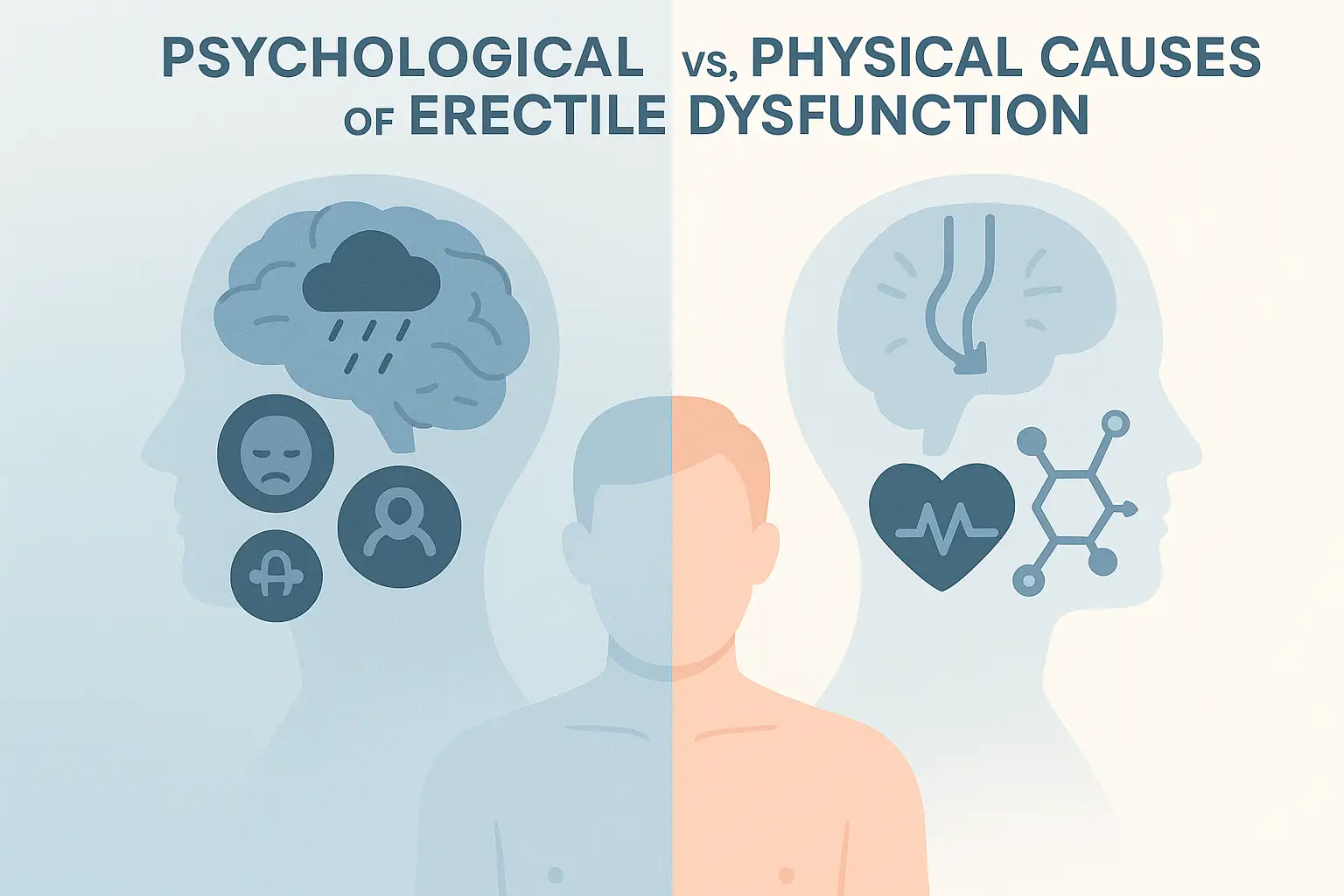
ED can be caused by two main factors: physical and psychological. In many cases, ED is a combination of both.
Common Causes of Erectile Dysfunction
Understanding the cause of erectile dysfunction is key to discovering whether it’s physical or psychological.
Physical Causes
Typically, physical ED is commonly associated with medical issues, such as illnesses or other conditions that affect blood circulation and nerve activity. Some examples are:
- Medical Conditions: Diabetes, Hypertension, and Heart diseases can be factors that result in Premature ejaculation and erectile dysfunction as they affect blood flow.
- Lifestyle Factors: smoking cigarettes, drinking alcoholic beverages, and drug use further lead to obesity, which decreases the testosterone lifespan of testosterone.
- Age: Smoking, high alcohol consumption, and obesity are some of the most prevalent causes of erectile dysfunction among men in their 20s, although ED is more prevalent in older men.
Psychological Causes of Erectile Dysfunction
Alternatively, psychological ED can stem from thoughts and feelings associated with emotional health. Such factors include:
- Anxiety and Erectile Dysfunction: Anxiety interferes with the brain-body relationship, sleep, which is essential to staying calm enough to sustain an erection.
- Depression and Stress: Emotional distress can hurt appetite and sexual performance
- Performance Anxiety: Not being able to please your partner could bring about a cyclical effect in which the ED gets worse and worse.
- Relationship Issues: ED can result from emotional disconnection with a partner or unresolved issues within the relationship.
Here’s what sets psychological ED apart:
- Psychological ED can emerge suddenly, most of the time in stressful situations.
- Morning or night erections while asleep can still occur.
- Certain conditions, such as performance anxiety, lead to the triggering of the symptoms.
What Is Psychological ED?
Psychological ED explains when erections are affected by emotional or mental factors, which could be stress, anxiety, or low self-esteem.
Identifying if Your ED Is Psychological
Here are some signs that your erectile dysfunction (ED) might be caused by emotional or mental factors:
- An attraction to your partner and wanting to have sex, but you can’t keep or maintain an erection.
- In the case of masturbation, an erection could be achieved, but not during sex.
- It gets harder to pay attention or even relax during sexual activities.
- Your thoughts or beliefs about sex, like religious views or culture, make intimacy unenjoyable.
- Arguments, quarrels, or a lack of intimacy and connection with the partner can serve as a dampener to the libido.
- In the case of moderate ED, there are no clear medical causes.
How Stress and Anxiety Play a Role
You might be asking: “Will stress cause erectile dysfunction?” Absolutely. Chronic stress and anxiety interfere with your body’s ability to relax, reducing blood flow and libido.

How Mental Health Conditions Affect Sexual Performance
| Mental Health Condition | How It Affects Sexual Performance | How to Overcome It |
| Anxiety | Causes overthinking, stress, and inability to relax during sex. | Practice relaxation techniques, such as deep breathing and mindfulness. Seek therapy for anxiety management. |
| Depression | It lowers libido, reduces energy, and affects self-esteem. | Consider talk therapy (like CBT), lifestyle changes, or antidepressants as prescribed by a doctor. |
| PTSD (Post-Traumatic Stress Disorder) | Triggers fear, emotional detachment, and avoidance of intimacy. | Trauma-focused therapy (like EMDR), support groups, and open communication with your partner. |
How Common Is Psychological ED
| Factor | Details |
| Total Affected by ED in the U.S. | Over 12 million men |
| Study Findings (General) | Over 10% of men with ED reported psychological factors as the primary cause |
| Study Findings (Men Under 40) | 13% of ED cases in younger men (under 40) were due to psychological causes |
How to Overcome Psychological ED
Psychological ED is elementary to treat. Here’s how to treat psychological erectile dysfunction such that it does not come back:
Mental Health Support
- Therapy: CBT or other types of psychotherapy can help with anxiety during performance or difficulty in relationships.
- Relaxation Techniques: These include yoga and other stress relievers since stress is a common cause of erectile dysfunction.
Lifestyle Adjustments
- Get enough sleep.
- Regular exercise enhances muscle blood flow and helps alleviate stress.
- Avoid smoking and excessive alcohol, both of which worsen ED symptoms.
Psychological Erectile Dysfunction Treatment
- A counselor can help you overcome performance anxiety or stress regarding erectile dysfunction.
- Psychotherapy can be supplemented with the use of drugs that will reduce the distress of psychological erectile dysfunction.
It is important to see a specialist. These options include:
Medication Support: Combining ED Treatments with Mental Health Therapy
In cases of psychological erectile dysfunction (ED), doctors may recommend oral medications like sildenafil (Viagra and Cenforce) or tadalafil (Cialis) to help relieve performance anxiety and restore sexual function. These medications work by increasing blood flow to the penis, but in psychologically driven ED, they are most effective when used in combination with psychotherapy or counseling.
Always consult with a licensed healthcare provider before starting or combining any medications.
Supportive Communication
Always keep open lines of communication with your partner around this issue. Talking about ED does reduce pressure around needing to perform and brings you closer emotionally, which helps to make intimacy better.
When to See a Doctor
Once you have started to alter your lifestyle to resolve your ED but without any success, then a medical professional should be sought. They will advise combining different therapies, medications, and stress management techniques.
The combination of treatment on both the physical and psychological components of the erectile dysfunction problem normally yields the best outcome.
Conclusion
ED is not a life sentence; it’s a condition that many men face and successfully overcome. If your ED is psychological, treatments like therapy, mindfulness practices, and building emotional intimacy can work wonders.
Addressing other physical health issues and revamping one’s lifestyle is also a good way to seek help for ED. This way, one can increase their confidence and overcome eating disorders (ED).
Doing something or taking medical advice is the first step that will help you stand back up and regain a satisfying and enjoyable sexual life.
References
Medical News Today — What to Know About Erectile Dysfunction Click here
Mayo Clinic — Erectile Dysfunction: Symptoms & Causes Click here
Cleveland Clinic — Erectile Dysfunction: Causes and Treatments Click here
WebMD — Psychological Causes of ED Click here
Choosing Therapy — Understanding Psychological ED: Diagnosis & Treatment Click here