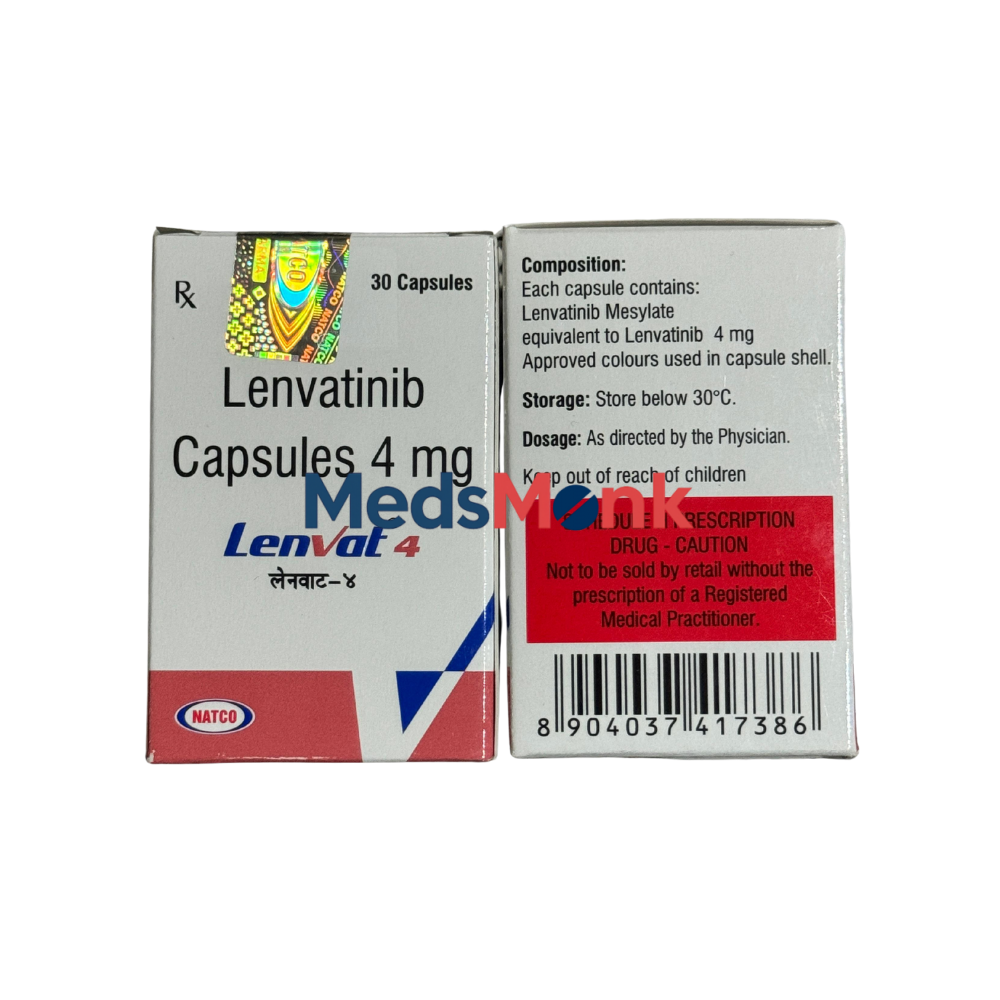
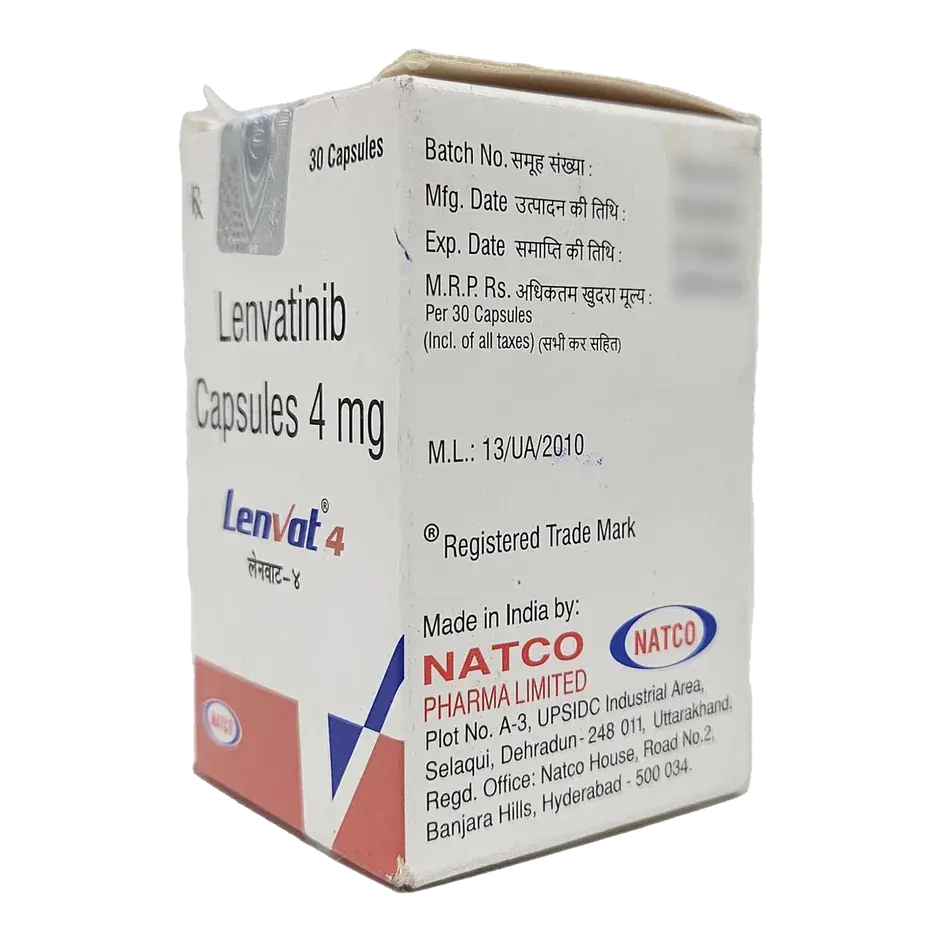
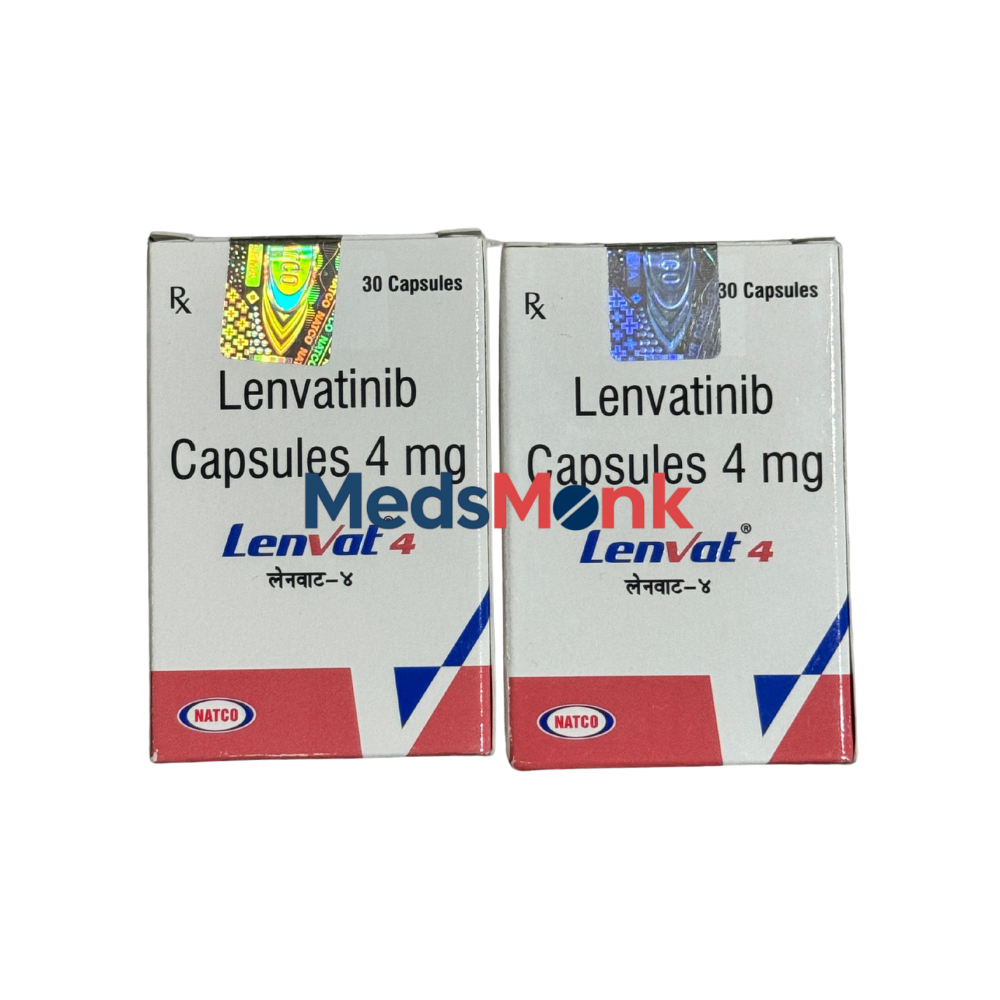
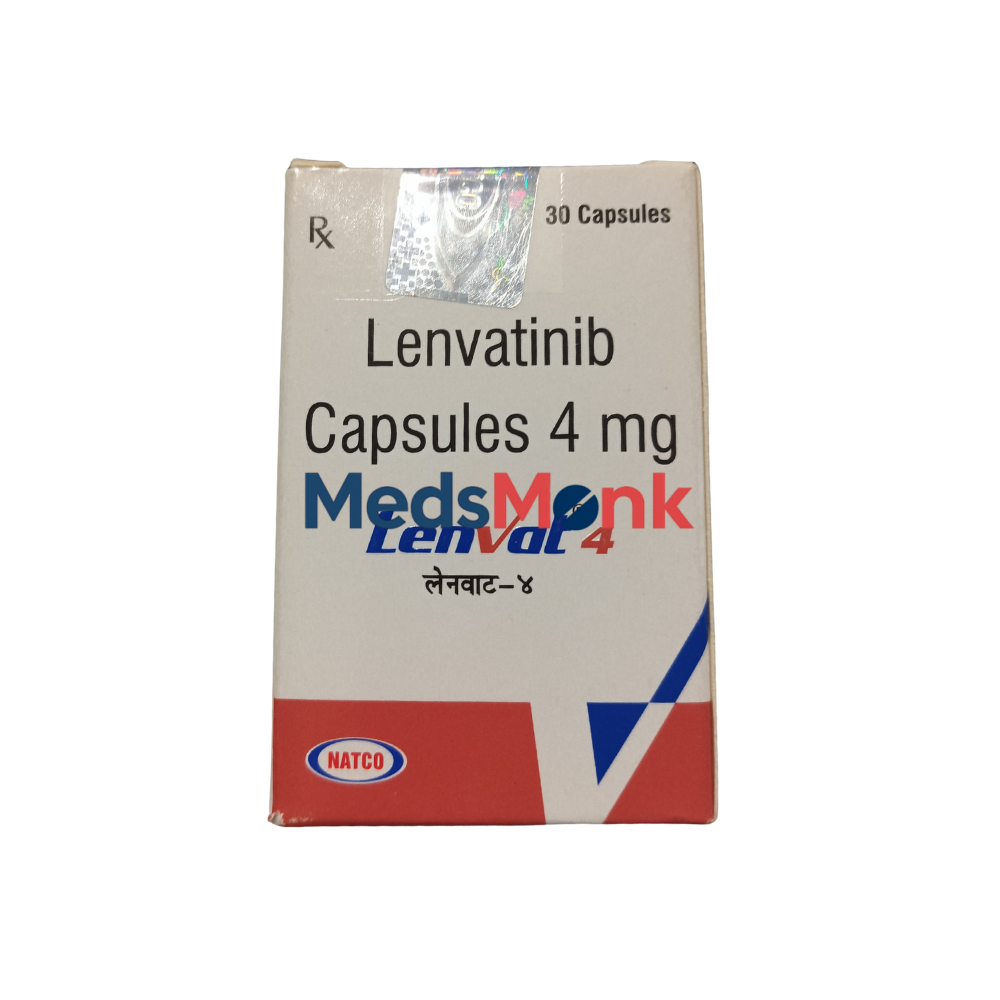
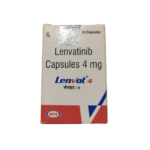
Lenvat 4 mg Capsule
Please fill in the details below, and we’ll get back to you as soon as possible
Similar Products:
| Image | Product | Manufacturer / Marketed By | Price |
|---|---|---|---|
![]() | Lenvakast Lenvatinib 4 mg Capsule | Aprazer Healthcare | Ask for Price |
![]() | Lenvima Lenvatinib 4 mg Capsule | Eisai Inc | Ask for Price |
![]() | Lenvaxen Lenvatinib 4 mg Capsule | Everest Pharma | Ask for Price |
Description
Lenvat 4 mg Capsule is a prescription cancer medicine made by Natco Pharma Ltd. It contains the active ingredient lenvatinib, which belongs to a targeted treatment group called tyrosine kinase inhibitors (TKIs). Lenvatinib 4 mg Capsule treats thyroid, kidney, and liver cancer. Lenvatinib blocks specific proteins: VEGFR1, VEGFR2, VEGFR3, FGFR1, FGFR2, FGFR3, FGFR4, PDGFRα, RET, and KIT, which help cancer cells grow and make new blood vessels. Cancer cells use blood vessels to get food and oxygen. By stopping this process, Lenvat 4 mg slows or stops cancer growth, and may even help reduce tumor size. This medicine is only available with a doctor's prescription and should be taken exactly as your healthcare provider advises to ensure safety and effectiveness.
Benefits
- Directly targets cancer growth: Lenvatinib is a targeted therapy that blocks multiple proteins (like VEGFR, FGFR, PDGFR, RET, and KIT) that help tumors grow, multiply, and spread.
- Slows cancer progression: It helps slow down or stop the growth of cancer cells in patients with thyroid, kidney, and liver cancers, especially in cases where other treatments haven’t worked.
- Shrinks tumors: Lenvatinib 4 mg can reduce tumor size by blocking the cancer’s blood supply (angiogenesis), making cancer more manageable.
- Effective in advanced cancers: It is especially useful in advanced (Stage III) or metastatic cancers, where the disease has spread to other parts of the body or cannot be removed by surgery.
- Oral administration: Lenvat 4 mg is taken by mouth, making it a convenient, non-invasive option compared to injectable therapies.
- Used with other therapies: It may be combined with other medicines like everolimus for better treatment outcomes for kidney cancer.
Improved quality of life: In clinical trials, many patients showed slower disease progression, allowing for better daily functioning and longer survival times in some cancer types.
Indications and Usage
Lenvat 4 mg Capsule (lenvatinib) treats thyroid, kidney, and liver cancer by slowing the growth and spread of tumor cells. It is a targeted therapy prescribed by doctors when other treatments, like radioactive iodine therapy or prior anti-angiogenic therapy, may not be effective or suitable.
Approved Uses:
-
- Thyroid Cancer: For adults with radioactive iodine-refractory differentiated thyroid cancer (DTC)—a cancer that no longer responds to radioactive iodine therapy.
- Kidney Cancer: For patients with advanced renal cell carcinoma (RCC):
- As a first-line treatment when combined with pembrolizumab
- Used in combination with everolimus after progression on prior anti-angiogenic therapies, such as:
- Sunitinib (Sutent)
- Pazopanib (Votrient)
- Axitinib (Inlyta)
- Bevacizumab (Avastin)
- Temsirolimus (Torisel)
- Sorafenib (Nexavar)
- Liver Cancer
For adults with unresectable hepatocellular carcinoma (HCC), liver cancer that cannot be removed with surgery. - Endometrial Cancer (in combination: Lenvatinib + Pembrolizumab )
For advanced endometrial carcinoma that has progressed after previous treatments, when used with pembrolizumab
Major global health agencies, including the U.S. FDA and EMA, approve these uses.
How it Works
Lenvat 4 mg Capsule contains lenvatinib, a potent anti-cancer drug known as a tyrosine kinase inhibitor (TKI). Tyrosine kinases are special enzymes (proteins) found in the body that play a key role in how cells grow, divide, and form new blood vessels.
Why Cancer Cells Need These Proteins:
Cancer cells grow and survive by sending signals through tyrosine kinases, which tell them to:
- Grow rapidly and uncontrollably
- Spread to other parts of the body (metastasis)
- Create new blood vessels (angiogenesis) to bring oxygen and nutrients to the tumor
This helps tumors stay alive, grow bigger, and spread quickly.
What 4 mg Lenvatinib Targets
Lenvatinib works by blocking multiple receptors that are often overactive in cancer cells, such as:
- VEGFR (Vascular Endothelial Growth Factor Receptor) – helps form new blood vessels
- FGFR (Fibroblast Growth Factor Receptor) – supports tumor growth and survival
- PDGFR (Platelet-Derived Growth Factor Receptor) – involved in blood vessel formation and tissue repair
- RET and KIT – mutated or overactive in several types of tumors
By blocking these receptors, lenvatinib disrupts the signals that cancer cells rely on to grow and survive.
What Happens When Lenvatinib Starts Working
When Lenvat 4 mg begins to take effect, it can help limit the cancer’s ability to grow and spread.
Here’s how it may help:
- Slows or stops tumor growth: Cancer cells stop receiving the signals they need to grow and multiply.
- Reduces blood supply to tumors: By blocking the formation of new blood vessels, tumors are deprived of oxygen and nutrients.
- Weakens cancer cells: Without enough support, cancer cells may become fragile and begin to die over time.
May shrink tumors or stop them from spreading: Some tumors may reduce in size, or at least stop moving to other parts of the body.
Dosage & Administration
Recommended Dosage for Lenvatinib 4 mg:
The appropriate dosage of Lenvatinib varies depending on the type of cancer being treated, the patient’s body weight, and overall health. A healthcare provider will determine the most suitable dose for each individual.
Typical dosing guidelines include:
- Differentiated Thyroid Cancer (DTC): 24 mg taken orally once daily.
- Advanced Renal Cell Carcinoma (RCC):
- First-line treatment (with pembrolizumab): 20 mg taken orally once daily.
- Previously treated (with everolimus): 18 mg taken orally once daily.
- Hepatocellular Carcinoma (HCC):
- Patients weighing ≥60 kg: 12 mg taken orally once daily.
- Patients weighing <60 kg: 8 mg taken orally once daily.
- Advanced Endometrial Carcinoma (with pembrolizumab): 20 mg taken orally once daily.
Dosage adjustments may be necessary based on individual tolerance and the presence of side effects. It’s crucial to follow the prescribing doctor’s instructions and not to alter the dosage without medical consultation.
How to Take Lenvatinib 4 mg
Taking the Medication:
- Swallow whole: Take the capsule with a full glass of water. Do not crush, chew, or open it.
- Difficulty swallowing: If you have trouble swallowing the capsule, consult your doctor. They may advise dissolving the capsule in a small amount of water or apple juice. After mixing, consume the solution immediately and rinse the glass with additional liquid to ensure the full dose is taken.
Timing:
- Consistency matters: Take Lenvatinib at the same time each day to maintain steady levels in your body.
- With or without food: You can take this medication regardless of meals.
Frequency:
- Once daily: Typically, Lenvatinib is taken once a day. Follow your doctor’s instructions precisely.
Missed Dose:
- If you forget a dose: Take it as soon as you remember. However, if it’s nearly time for your next dose, skip the missed one. Do not double up to make up for a missed dose.
Overdose Warning:
- Seek immediate help: Taking too much Lenvatinib can lead to serious health issues, including high blood pressure, liver problems, or severe bleeding. If you suspect an overdose, contact your doctor or go to the nearest hospital right away.
Always consult your healthcare provider for personalized guidance.
Strengths & Substitutes
| Strength | Alternative Options | ||
| 4 mg | Lenvima 4 mg Capsule | Lenvakast 4mg Capsule | Lenvaxen 4mg Capsule |
| 10 mg | Lenvima 10 mg Capsule | Lenvakast 10 mg Capsule | Lenvaxen 10 mg Capsule |
Always consult your doctor before changing your dose or switching to a different brand.
Side Effects
While effective, lenvatinib may cause side effects. It’s essential to be aware of these to manage them appropriately.
Common Side Effects of Lenvat 4 mg Capsule
These side effects are usually mild and may improve over time:
- High blood pressure
- Diarrhea
- Tiredness or fatigue
- Loss of appetite
- Weight loss
- Nausea or vomiting
- Mouth sores or dry mouth
- Hair thinning or loss
- Joint or muscle pain
- Skin rash or peeling, especially on palms and soles
Less Common but Serious Side Effects
Seek medical attention if you experience:
- Bleeding (e.g., nosebleeds, blood in urine)
- Liver issues (yellowing of eyes/skin, dark urine)
- Kidney problems (reduced urine output, swelling in legs or face)
- Severe stomach pain or difficulty swallowing
Severe Reactions (Seek Immediate Help)
Contact emergency services if you notice:
- Chest pain
- Shortness of breath
- Fast or irregular heartbeat
- Severe headache
Allergic reactions (swelling, rash, difficulty breathing)
Warning and Precaution
Who Should Avoid Lenvat 4 mg Capsules?
Consult your doctor before using if you:
- Have serious liver or kidney disease
- Have uncontrolled high blood pressure
- Are allergic to lenvatinib
- Are pregnant or breastfeeding (unless approved by your doctor)
Drug Interactions
Avoid taking Lenvat 4 mg Capsules with medications that can affect heart rhythm, such as:
- Amiodarone
- Haloperidol
- Pimozide
- Sotalol
- Thioridazine
These combinations may increase the risk of severe heart problems.
Food & Lifestyle Considerations
- Avoid alcohol during treatment.
- Do not consume grapefruit or juice, which may interfere with the medication.
- Use effective birth control during treatment and for at least one month after stopping the medication.
Special Warnings
- Older adults and those with heart conditions should use caution, as they may be more susceptible to side effects.
- Fertility may be affected in both men and women; discuss concerns with your doctor.
Patient Guidance
Storage Instructions
To keep your medication safe and effective:
- Store in a cool, dry place away from moisture and direct sunlight.
- Do not refrigerate or freeze.
- Keep the temperature below 30°C (86°F).
- Always keep children and pets out of reach.
- Do not use the medicine after the expiration date printed on the packaging.
General Use Tips
To ensure safe and effective treatment:
- Take the medicine exactly as prescribed by your doctor.
- Try to take it at the same time each day for best results.
- Do not stop or change the dose without your doctor’s approval.
- Do not share this medication with others, even if they have similar symptoms.
- Attend regular doctor visits to monitor your progress and manage any side effects.
- Get routine tests including:
- Blood pressure checks
- Liver and kidney function tests
- Please immediately report any unusual symptoms, such as swelling, chest pain, or yellowing of the skin, to your doctor.
Clinical Trial & Approvals
Thyroid Cancer (Radioactive Iodine-Refractory Differentiated Thyroid Cancer)
- Progression-Free Survival (PFS): In the SELECT trial, lenvatinib significantly extended PFS to a median of 18.3 months compared to 3.6 months with placebo.
- Response Rate: Approximately 65% of patients experienced tumor shrinkage, indicating a high objective response rate.
- Real-World Data: Subsequent studies have reinforced these findings, demonstrating consistent efficacy in everyday clinical settings.
Kidney Cancer (Advanced Renal Cell Carcinoma)
- Combination Therapy: Lenvatinib combined with everolimus improved outcomes for patients with advanced renal cell carcinoma.
- Progression-Free Survival: The combination therapy extended PFS to a median of 14.6 months compared to 5.5 months with everolimus alone.
- Overall Survival: Patients receiving the combination therapy had a median overall survival of 25.5 months versus 15.4 months with everolimus alone.
Liver Cancer (Unresectable Hepatocellular Carcinoma)
- REFLECT Trial: Lenvatinib was found to be non-inferior to sorafenib in overall survival for patients with unresectable hepatocellular carcinoma.
- Progression-Free Survival: Lenvatinib demonstrated a median PFS of 7.4 months compared to 3.7 months with sorafenib.
- Response Rate: The objective response rate was higher with lenvatinib (24.1%) than with sorafenib (9.2%).
References
MedlinePlus – Lenvatinib Oral Route: Information on uses, side effects, precautions, and interactions. Click here
Drugs.com – Lenvatinib Professional Information: Detailed prescribing and safety information. Click here
Mayo Clinic – Lenvatinib (Oral Route) Precautions Click here
Medscape – Comprehensive clinical and pharmacological data. Click here
FDA – Lenvatinib Prescribing Information Click here
New England Journal of Medicine – Lenvatinib and Everolimus in Renal Cancer
Clinical trial results show a survival benefit in advanced renal cancer. Click here
FAQ
Related Products
Related Posts:
No matching posts found.
Only logged in customers who have purchased this product may leave a review.


Reviews
Clear filtersThere are no reviews yet.