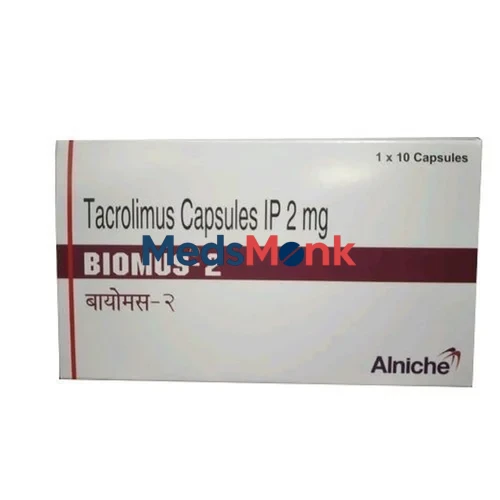






BIOMUS 0.25MG CAPSULE
Please fill in the details below, and we’ll get back to you as soon as possible
Description
Biomus 0.25mg Capsule is an immunosuppressant. It works by suppressing your body's immune response following the transplant of an organ (e.g., liver, kidney, heart). This helps your body to accept the new organ as if it were your own.
Benefits
Biomus 0.25mg Capsule is used along with other medicines to prevent your body from rejecting a new organ (e.g., liver, kidney, or heart) after transplant.
Indications and Usage
- Prevention of organ rejection in patients receiving an allogeneic (from a donor) kidney, liver, or heart transplant.
- It is typically used as part of a combination therapy with other medicines to weaken the body’s immune system, which helps the body accept the new organ as its own.
In some cases, and under strict medical supervision, it may also be used for other immune-mediated disorders when standard treatments are ineffective:
- Treatment of refractory (resistant) rejection in existing transplant patients.
- Management of certain severe autoimmune diseases, such as rheumatoid arthritis or Crohn’s disease.
- Management of autoimmune liver diseases or autoimmune eye conditions (uveitis).
- Prevention of graft-versus-host disease after a bone marrow or stem cell transplant.
How it Works
BIOMUS 0.25MG CAPSULE (active ingredient: tacrolimus) is an immunosuppressant medication. It works by weakening the body’s immune system to prevent it from attacking and rejecting a transplanted organ.
Dosage & Administration
- The type of organ transplant (kidney, liver, heart, etc.).
- Your body weight.
- Your individual response to the medication.
- Other medicines you may be taking concurrently.
Side Effects
- Tremors (shakiness)
- Headache
- Insomnia (difficulty sleeping)
- Nausea, vomiting, stomach pain, and/or diarrhea
- High blood pressure (hypertension)
- Increased blood sugar levels (hyperglycemia), which may lead to diabetes
- Abnormal liver function tests
- Increased blood creatinine and impaired kidney function
- Anemia and low white blood cell count
- Burning or tingling sensation (paresthesia)
Warning and Precaution
- Increased Risk of Infection: Because Biomus suppresses the immune system, you are more susceptible to infections, which can be serious or fatal. Report any signs of infection (fever, chills, sore throat, cough, flu-like symptoms, unusual skin sores) to your doctor immediately.
- Increased Cancer Risk: Long-term use of immunosuppressants can increase the risk of developing certain cancers, particularly skin cancer and lymphoma. You should limit exposure to natural and artificial UV light (sunlamps, tanning beds) and wear protective clothing and high-SPF sunscreen when outdoors.
- Kidney and Liver Problems: Biomus can cause or worsen kidney and liver problems. Regular blood tests to monitor kidney and liver function are essential.
- Diabetes and High Blood Pressure: The medication can increase blood sugar levels (potentially causing new-onset diabetes) and raise blood pressure. Your blood pressure and glucose levels will need frequent monitoring.
- Pregnancy and Breastfeeding: Biomus is generally not recommended during pregnancy or breastfeeding as it may harm the baby. Both men and women should use effective birth control during treatment to prevent pregnancy.
- Nervous System Effects: The medicine may cause tremors, headaches, vision changes, or dizziness. Avoid driving or operating machinery if you experience these symptoms.
- Do Not Stop Abruptly: Never stop taking Biomus without consulting your doctor first, as sudden discontinuation can lead to organ rejection.
- Vaccinations: Avoid live vaccines (e.g., measles, mumps, rubella, chickenpox, yellow fever) while on this medication, as they may not be effective or could cause infection.
- Alcohol and Grapefruit: Avoid consuming alcohol and grapefruit or grapefruit juice, as they can interfere with the drug’s metabolism and increase the risk of side effects or toxicity.
- Medication Interactions: Inform your doctor about all other medications, supplements, and herbal preparations you are taking, as many can interact with tacrolimus. Certain antibiotics, antifungals, and blood pressure medications require caution.
- Monitoring: You will need regular medical tests (blood counts, kidney/liver function, blood pressure, glucose, potassium, magnesium levels) to monitor your progress and adjust the dose as needed.
- Administration: Take the capsule as a whole on an empty stomach, at least one hour before or two to three hours after a meal, at the same time each day. Do not crush, chew, or break the capsule.
Patient Guidance
Clinical Trial & Approvals
- U.S. Food and Drug Administration (FDA): Tacrolimus was first approved by the FDA on April 8, 1994, for the prophylaxis (prevention) of organ rejection in patients receiving liver transplants. Subsequent approvals expanded its use to kidney, heart, and lung transplants in both adult and pediatric patients.
- European Medicines Agency (EMA) / European Union: Tacrolimus was first approved in the EU in 1994 (initially in the UK for liver and kidney transplantation). A harmonized marketing authorization for the brand Prograf was issued by the European Commission on April 10, 2006.
- Biomus (Generic) Approval: Biomus is a generic version of tacrolimus marketed by Alniche Life Sciences in India. Generic medications are approved based on demonstrating bioequivalence to the original, brand-name drug, meaning they work in the same way and provide the same clinical effect. They do not undergo the same large-scale, de novo clinical trials as the original patented drug.
- Organ Transplant Prevention: Multiple large-scale, multicenter clinical trials have demonstrated that tacrolimus is a highly effective primary immunosuppressant, significantly reducing acute rejection rates in kidney, liver, and heart transplant recipients compared to other medications like cyclosporine.
- Long-Term Benefits: Studies show that tacrolimus-based immunosuppression may lead to improved long-term graft function and survival rates.
- Side Effect Profile: Clinical trials identified specific side effects associated with tacrolimus use, such as diabetes mellitus and neuro/nephrotoxicity, which are more common than with cyclosporine; however, its overall efficacy profile has made it a cornerstone therapy in transplantation medicine.
References
Biomus 0.25mg Capsule is used along with other medicines to prevent your body from rejecting a new organ
Related Products
Related Posts:
No matching posts found.
2 reviews for BIOMUS 0.25MG CAPSULE
Clear filtersOnly logged in customers who have purchased this product may leave a review.


Test Review –
Delivery process is very good, and the support system is very good.
good one –
best delivery and support system and most affordibility