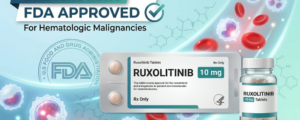
Ruxolitinib Tablets Receive FDA Approval for Hematologic Malignancies
Medical Review DisclosureThis content has been reviewed for medical accuracy. Always consult a qualified healthcare professional before making any medical
Cancer Medicine

Medical Review Disclosure
This content has been reviewed for medical accuracy. Always consult a qualified healthcare professional before making any medical decisions. [Last reviewed: 2026-05-16]
n
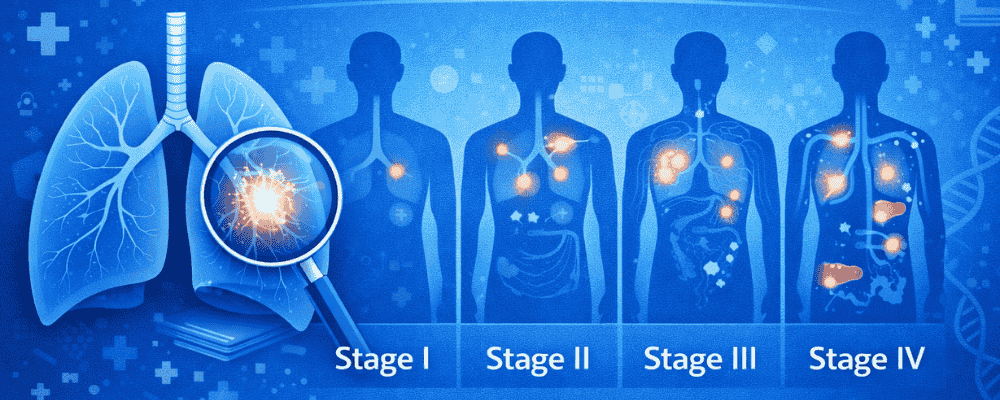
Lung cancer staging is a critical step in understanding how far the disease has progressed and what treatment options are available. Doctors use staging to plan therapy, estimate prognosis, and guide patient care decisions.
In this detailed guide, we’ll break down the four stages of lung cancer in simple terms and also highlight key targeted therapy molecules used at each stage—helping you build strong internal linking opportunities for your website.
Staging describes how much cancer is in the body and how far it has spread. It is primarily based on the TNM system:
These factors are combined to assign stages from Stage I to Stage IV.
Stage I lung cancer is considered the earliest stage of invasive lung cancer. At this stage, the tumor is confined entirely within the lung and has not spread to nearby lymph nodes or distant organs. Because the disease is still localized, Stage I offers the best chance for successful treatment and long-term survival.
Stage I is further divided into two substages based on tumor size and extent:
These distinctions are important because even small increases in tumor size can influence treatment decisions.
In Stage I, cancer cells begin forming a tumor in the lung tissue, usually in the lining of the airways or alveoli (air sacs). At this point:
Because the cancer is still contained, it is often easier to remove completely through surgery.
Many patients with Stage I lung cancer experience no noticeable symptoms. When symptoms do occur, they are usually mild and can be mistaken for common respiratory issues.
Because symptoms are subtle, Stage I lung cancer is often detected incidentally during imaging tests (like CT scans) done for other reasons.
Early-stage lung cancer is typically diagnosed through:
Early diagnosis allows for more treatment options and better outcomes.
The primary goal of treatment at this stage is the complete removal of the tumor.
Used in some cases to reduce recurrence risk:
With advances in precision medicine, certain patients may receive targeted therapy after surgery, especially if specific mutations are found.
These therapies work by blocking signals that help cancer cells grow.
Stage I lung cancer has the highest survival rate among all stages because it is detected early and has not spread.
Even after successful treatment, there is still a risk of recurrence. Factors influencing recurrence include:
This is why follow-up care and monitoring are essential.
After treatment, patients are closely monitored to detect any recurrence early.
Lifestyle changes such as quitting smoking and maintaining lung health are also strongly recommended.
Stage I lung cancer is highly treatable and often curable when detected early. However, due to its silent nature, regular screening in high-risk individuals is critical. Advances in targeted therapy and early detection methods continue to improve survival outcomes and reduce the risk of recurrence.
Stage III lung cancer is considered a locally advanced stage, meaning the cancer has spread beyond the original tumor in the lung to nearby lymph nodes and surrounding structures within the chest—but not yet to distant organs like the brain or liver.
This stage is more complex than earlier stages and often requires a multidisciplinary treatment approach that combines different therapies to achieve the best outcomes.
Stage III is divided into three substages based on how far the cancer has spread:
Cancer has spread to the lymph nodes on the same side of the chest as the tumor
The tumor may still be operable in some cases
Considered a “borderline” stage between early and advanced disease
Cancer has spread to lymph nodes on the opposite side of the chest or near the collarbone
The tumor may involve nearby vital structures
Surgery is usually not an option
More extensive lymph node involvement and/or larger tumors
Often involves multiple lymph node regions
Typically not suitable for surgical removal
These substages help doctors decide whether surgery, radiation, or systemic therapies are most appropriate.
At Stage III, lung cancer has progressed beyond a single localized tumor:
Cancer cells spread through the lymphatic system
Nearby lymph nodes (mediastinal nodes) become involved
The tumor may invade nearby structures such as:
Chest wall
Blood vessels
Airways (bronchi)
Esophagus
Despite this spread, the cancer is still considered regional, not distant.
Symptoms become more noticeable and persistent as the disease progresses.
Persistent and worsening cough
Chest pain that may worsen with breathing or coughing
Shortness of breath
Fatigue and weakness
Unexplained weight loss
Hoarseness: Due to nerve involvement
Difficulty swallowing: If the esophagus is affected
Swelling in the face or neck: Caused by blocked blood flow (superior vena cava syndrome)
Frequent lung infections, Such as pneumonia or bronchitis
These symptoms often prompt medical evaluation and diagnosis.
At this stage, accurate staging is crucial to determine the best treatment plan.
CT scan and PET scan: To assess tumor size and lymph node involvement
MRI: Especially if nearby structures are affected
Biopsy: Confirms cancer type and molecular profile
Molecular testing: Identifies mutations like EGFR, ALK, or KRAS
Doctors also evaluate whether the tumor is resectable (that is, can be removed surgically) or unresectable.
Treatment for Stage III lung cancer is typically more aggressive and involves a combination of therapies.
A combination of chemotherapy and radiation therapy
Helps shrink tumors and control local spread
Possible in Stage IIIA if the tumor is operable
Usually followed by chemotherapy or radiation
Given after chemoradiation to improve survival
Helps the immune system target cancer cells
In Stage III lung cancer, treatment is increasingly guided by biomarker testing and genetic profiling. This allows for more personalized therapy and better outcomes.
Durvalumab
Used as maintenance therapy after chemoradiation in unresectable Stage III NSCLC. It helps delay disease progression and improve survival.
EGFR-Targeted Therapy (Osimertinib)
May be used in patients with EGFR mutations, especially in selected cases after primary treatment.
Immune Checkpoint Inhibitors
Nivolumab
These drugs target PD-1/PD-L1 pathways to boost the immune response against cancer.
Stage III lung cancer has a moderate prognosis, depending on several factors:
Substage (IIIA vs IIIC)
Tumor size and spread
Response to treatment
Patient’s overall health
5-year survival rates range from 15% to 35%
Early and aggressive treatment can significantly improve outcomes.
Stage III is one of the most challenging stages to treat due to:
Complex tumor location
Involvement of critical structures
Limited surgical eligibility
Higher risk of recurrence
This is why treatment planning often involves a team of specialists, including oncologists, surgeons, and radiologists.
After treatment, close monitoring is essential:
Regular imaging (CT scans)
Physical examinations
Monitoring for recurrence or progression
Patients are also advised to:
Quit smoking
Maintain a healthy lifestyle
Follow treatment plans strictly
Stage III lung cancer represents a critical turning point where the disease has spread regionally but is still potentially controllable. With advances in combination therapy, immunotherapy, and targeted treatments, survival outcomes are improving.
Early diagnosis, proper staging, and personalized treatment strategies are key to managing this complex stage effectively.
Stage III lung cancer is considered locally advanced. The cancer has spread to lymph nodes in the chest and may involve nearby structures.
Advanced-stage but still potentially treatable with aggressive therapy.
Stage IV lung cancer is the most advanced stage of the disease. At this point, cancer has spread beyond the lungs to distant parts of the body—a process known as metastasis. Because of this widespread involvement, Stage IV is not considered curable in most cases, but it is treatable and manageable with modern therapies.
Stage IV is diagnosed when cancer spreads outside the chest to distant organs or when there is widespread involvement within the lungs.
It is further divided into:
This distinction helps doctors determine prognosis and choose the most appropriate treatment strategy.
Lung cancer spreads through:
Once cancer reaches distant organs, it forms secondary tumors, which still originate from lung cancer cells.
Stage IV lung cancer most commonly spreads to:
The location of the spread significantly influences symptoms and treatment planning.
Symptoms become more severe and systemic as the disease progresses.
These symptoms often indicate widespread disease and require urgent medical attention.
At Stage IV, diagnosis focuses not only on confirming cancer but also on understanding its molecular profile.
This molecular profiling is crucial for selecting targeted therapies.
Unlike early stages, the goal of treatment in Stage IV is to:
Treatment is highly personalized based on genetic mutations, overall health, and extent of spread.
Stage IV lung cancer has seen major advancements due to precision medicine, where treatments are tailored to specific mutations.
EGFR Mutation-Positive:
ALK Rearrangement:
ROS1 Mutation:
KRAS G12C Mutation:
These therapies block specific pathways that cancer cells use to grow, making them more effective and often better tolerated than traditional chemotherapy.
Immunotherapy has transformed the treatment landscape for advanced lung cancer.
These drugs help the immune system recognize and attack cancer cells, especially in tumors expressing PD-L1.
Chemotherapy is still widely used, especially when:
It is often combined with:
This combination approach improves survival and disease control.
Palliative care is an essential part of Stage IV treatment. It focuses on improving the quality of life.
It can be provided alongside active cancer treatment.
Stage IV lung cancer has a lower survival rate compared to earlier stages, but outcomes are improving due to new therapies.
Prognosis depends on:
Stage IV lung cancer represents advanced disease with distant spread, but it is no longer a “hopeless” stage. With the rise of targeted therapy, immunotherapy, and personalized treatment, many patients are experiencing longer survival and better quality of life.
Early molecular testing, timely treatment, and ongoing monitoring are critical in managing this stage effectively.
Unlike NSCLC, small-cell lung cancer is classified into:
Treatment usually involves chemotherapy and immunotherapy rather than surgery.
Understanding the stage of lung cancer helps doctors:
Early-stage cancers are often curable, while advanced stages focus on long-term management.
The four stages of lung cancer—from Stage I to Stage IV—represent a progression from localized disease to widespread metastasis. Each stage requires a different treatment approach, ranging from surgery in early stages to advanced targeted therapies and immunotherapy in later stages.
With advancements in molecular testing and precision medicine, treatments are becoming more personalized and effective. Understanding these stages not only helps patients but also opens opportunities for targeted content and internal linking around specific drugs and therapies.
Early stages (I–II) have significantly higher survival rates than Stage IV, which is more challenging to treat.
It is generally not curable, but treatments can help manage the disease and extend life.
Stage IV is the most advanced and aggressive stage due to widespread metastasis.
Through imaging tests, biopsies, and sometimes molecular testing.
A system that evaluates tumor size, lymph node involvement, and metastasis.
The four stages of lung cancer—from Stage I to Stage IV—represent a progression from localized disease to widespread metastasis. Each stage requires a different treatment approach, ranging from surgery in early stages to advanced targeted therapies and immunotherapy in later stages.
With advancements in molecular testing and precision medicine, treatments are becoming more personalized and effective. Understanding these stages not only helps patients but also opens opportunities for targeted content and internal linking around specific drugs and therapies.
Medical Review DisclosureThis content has been reviewed for medical accuracy. Always consult a qualified healthcare professional before making any medical
Medical Review DisclosureThis content has been reviewed for medical accuracy. Always consult a qualified healthcare professional before making any medical
Medical Review DisclosureThis content has been reviewed for medical accuracy. Always consult a qualified healthcare professional before making any medical
Our pharmacists can confirm availability, pricing and what your country requires for import.