

Tovorafenib Approved in Europe for Children with BRAF-Altered Low-Grade Glioma
Medical Review DisclosureThis content has been reviewed for medical accuracy. Always consult a qualified healthcare professional before making any medical
Cancer Medicine

Medical Review Disclosure
This content has been reviewed for medical accuracy. Always consult a qualified healthcare professional before making any medical decisions. [Last reviewed: 2026-08-12]
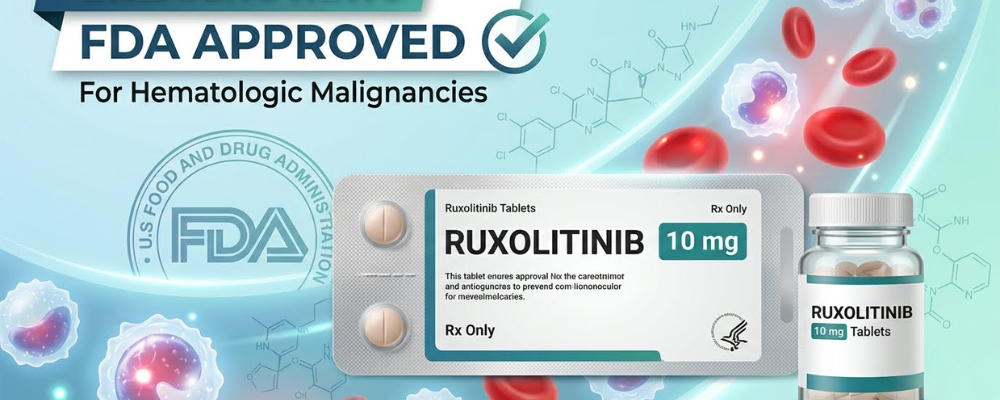
The U.S. Food and Drug Administration (FDA) has approved Ruxolitinib tablets for the treatment of certain hematologic malignancies, marking another important advancement in targeted therapy for blood cancers. This approval expands treatment options for patients living with serious bone marrow and blood disorders that can significantly affect quality of life and long-term survival.
Ruxolitinib has already played a major role in treating diseases driven by abnormal immune and inflammatory signaling pathways. The latest FDA approval further strengthens its position as a key therapy in modern hematology and oncology.
Hematologic malignancies are cancers that affect:
Blood
Bone marrow
Lymphatic system
These cancers develop when blood-forming cells grow abnormally and uncontrollably.
Myelofibrosis
Polycythemia vera
Leukemia
Lymphoma
These conditions can interfere with the body’s ability to:
Produce healthy blood cells
Fight infections
Control bleeding
Some hematologic cancers progress slowly, while others are aggressive and life-threatening.
Ruxolitinib is an oral targeted therapy classified as a:
It works by blocking abnormal signaling through the:
JAK1 pathway
JAK2 pathway
These pathways are involved in:
Blood cell production
Inflammation
Immune system regulation
In many hematologic malignancies, the JAK signaling pathway becomes overactive, causing uncontrolled blood cell growth and chronic inflammation.
Ruxolitinib blocks overactive JAK proteins that drive cancer growth and inflammatory symptoms.
Slow abnormal blood cell production
Reduce inflammation
Shrink the enlarged spleen
Improve disease-related symptoms
This targeted approach makes treatment more precise compared to traditional chemotherapy.
Ruxolitinib has been widely used in several blood-related disorders.
A rare bone marrow cancer causing:
Bone marrow scarring
Enlarged spleen
Severe fatigue
A disorder where the body produces too many red blood cells.
A complication after a stem cell transplant is when donor immune cells attack the body.
The latest FDA approval further supports its role in treating hematologic malignancies.
[Source: Cancer Network]
The approval of ruxolitinib tablets is significant because many patients with blood cancers have:
Limited treatment options
Severe symptoms
Reduced quality of life
Ruxolitinib offers a targeted therapy option that may:
Improve symptom control
Reduce spleen enlargement
Enhance daily functioning
Potentially improve survival outcomes
It also provides a convenient oral treatment option for eligible patients.
Clinical studies have demonstrated meaningful benefits in patients receiving ruxolitinib.
Patients often experience relief from:
Fatigue
Night sweats
Weight loss
Bone pain
Many hematologic malignancies cause splenomegaly (enlarged spleen).
Ruxolitinib has shown:
Significant spleen volume reduction
Relief from abdominal discomfort
By reducing inflammation and symptom burden, patients may experience:
Improved energy levels
Better physical functioning
Improved daily activity tolerance
Ruxolitinib is available in tablet form and is usually taken:
Orally
Once or twice daily, depending on dosing
Doctors adjust dosing based on:
Blood counts
Kidney and liver function
Treatment response
Regular monitoring is essential during therapy.
Like all cancer therapies, ruxolitinib may cause side effects.
Anemia
Low platelet counts
Headache
Dizziness
Increased infection risk
In some cases, patients may develop:
Severe infections
Bleeding complications
Changes in blood counts
Doctors closely monitor patients with regular blood tests during treatment.
Modern hematologic cancer care increasingly focuses on:
Instead of treating every patient the same way, therapies are selected based on:
Genetic mutations
Molecular abnormalities
Disease characteristics
Ruxolitinib is part of this movement toward more personalized and targeted cancer treatment.
Researchers continue exploring ruxolitinib and other JAK inhibitors in:
Combination therapies
Earlier disease stages
Additional blood cancers
Ongoing studies aim to:
Improve long-term disease control
Reduce resistance
Expand treatment options
This area of research continues to evolve rapidly.
The FDA approval of ruxolitinib tablets for hematologic malignancies represents another important advancement in targeted blood cancer treatment. By blocking abnormal JAK signaling, ruxolitinib helps reduce disease symptoms, improve quality of life, and provide more personalized treatment options for patients with serious hematologic disorders.
As precision medicine continues to transform oncology, targeted therapies like ruxolitinib are playing an increasingly important role in improving outcomes for blood cancer patients.
Ruxolitinib is used to treat several hematologic disorders, including myelofibrosis and polycythemia vera.
It is a targeted therapy known as a JAK inhibitor.
It blocks abnormal JAK signaling involved in blood cancer growth and inflammation.
No, it is a targeted therapy, not traditional chemotherapy.
Common side effects include anemia, low platelet counts, and increased infection risk.
Cancer Network – FDA Approves Ruxolitinib Tablets
https://www.cancernetwork.com/view/fda-approves-ruxolitinib-tablets-for-hematologic-malignancies
This content is for informational purposes only and should not replace professional medical advice, diagnosis, or treatment. Always consult a qualified healthcare provider regarding medical conditions or treatment decisions.
Medical Review DisclosureThis content has been reviewed for medical accuracy. Always consult a qualified healthcare professional before making any medical
Medical Review DisclosureThis content has been reviewed for medical accuracy. Always consult a qualified healthcare professional before making any medical
Medical Review DisclosureThis content has been reviewed for medical accuracy. Always consult a qualified healthcare professional before making any medical
Our pharmacists can confirm availability, pricing and what your country requires for import.